REVIEW · AMMAN
Dana to Petra Trek + Wadi Rum & the Dead Sea – 9 Days
Book on Viator →Operated by Experience Jordan Adventures · Bookable on Viator
Nine days, and Petra feels like yours. This Dana to Petra trek takes you through canyons, desert mountains, and Bedouin paths, then lands you in Petra via a route designed to help you dodge most of the crowds. You also get a real Wadi Rum 4×4 day with Bedouin hosts, plus time to float and recover at the Dead Sea.
I especially like the small group limit of 14, because it keeps the pace human and the trail experience calm. I also like that the itinerary mixes big “wow” sights with practical support: an English-speaking licensed guide on most trekking days, and a local hiking guide with a donkey for safety on the earlier hikes.
One drawback to factor in up front: this isn’t a gentle stroll. You need a strong physical fitness level for multi-day hiking with real ascent and descent.
In This Review
- Key takeaways before you lace up
- Why this Dana to Petra trek feels different from the usual tours
- Price and what you actually get for $1,595
- Your “fitness math”: what the Dana hiking days really ask of you
- Dana base camp nights: wilderness camping that actually helps you recover
- Little Petra (Siq al-Barid): the quiet canyon walk before Petra proper
- Entering Petra through the back door: Wadi Ghurab to The Monastery
- Wadi Rum with Bedouin hosts: 4×4 safari plus time to scramble
- Dead Sea reset day: floating, mud, and spa-style recovery
- Amman start and finish: Al Balad, Jordanian food, and time on your own
- Who this tour suits best (and who should think twice)
- Should you book Dana to Petra + Wadi Rum + Dead Sea?
- FAQ
- How many people are in the group?
- What’s included in the price?
- What entrance fees do I need to cover?
- What does the hiking look like in the Dana area?
- Do I need a high fitness level?
- Where do you sleep during the trek and in Wadi Rum?
- What happens at the Dead Sea?
- What if weather is bad or the trip is canceled?
Key takeaways before you lace up
- Small group (max 14) means more trail time with your guide and less waiting around.
- A quieter Petra entry helps you see Petra from a less crowded approach.
- Tented camping + meals included lowers the logistics stress on long walking days.
- Local safety support (donkey team on days 2–4) is a smart detail for tougher terrain.
- Wadi Rum with Bedouin hosts gives you both jeep exploring and time to climb, hike, and scramble.
- Dead Sea recovery time is built into the plan, so sore legs can actually bounce back.
Why this Dana to Petra trek feels different from the usual tours
I like trips that feel like they were designed by people who actually hike. This one does. You’re not just moving from one famous postcard to the next. You’re walking a multi-day route from the Dana Nature Reserve area toward Petra, mostly on paths tied to how people have traveled through the region for a long time.
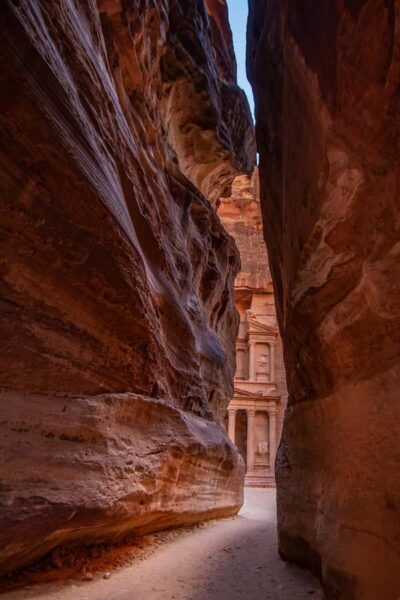
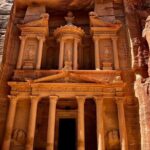
The biggest “how did they do this” detail is the way Petra is handled. Instead of funnelling everyone through the same busy entry, you go in via a hidden Nabataean route often referred to as a back door approach. That changes the whole vibe. You arrive in Petra with more time to notice the terrain and the building edges, not just the crowd swell.
There’s also a nice layer of the “lesser-known” built in. You visit Little Petra (Siq al-Barid), and you get a guided walk that includes stretches where you see Nabataean water systems and traces of older agriculture. It’s the kind of history you can feel in the ground, not just read off a sign.
You can also read our reviews of more tours and experiences in Amman.
Price and what you actually get for $1,595
At $1,595 per person, you’re paying for more than a guide and a bus. The value is in the combination:
- Multi-day guided trekking from Dana toward Petra, with support on the hardest early hiking days.
- Meals included: 8 breakfasts, 7 lunches, and 6 dinners.
- Accommodation included for 8 nights total, including wilderness camping and pre-arranged tented stays.
- Transportation as per itinerary, plus luggage transfers by pickup truck so you’re not hauling heavy bags on the trail.
- Wadi Rum jeep safari with Bedouin hosts and the Dead Sea experience included in the day plan.
The costs you should expect on top are also clearly flagged: the Jordan Pass (Jordan Wanderer) for visa and entrance fees, plus tips, travel insurance, airfare, personal expenses, and your own hiking gear.
If you’re deciding between this and piecing together separate guided parts, the easiest way to judge value is simple: count how many days you’d otherwise need to arrange (and pay for) guides, camping gear logistics, and transport. Here, much of that is bundled so you can focus on walking and not spreadsheets.
Your “fitness math”: what the Dana hiking days really ask of you
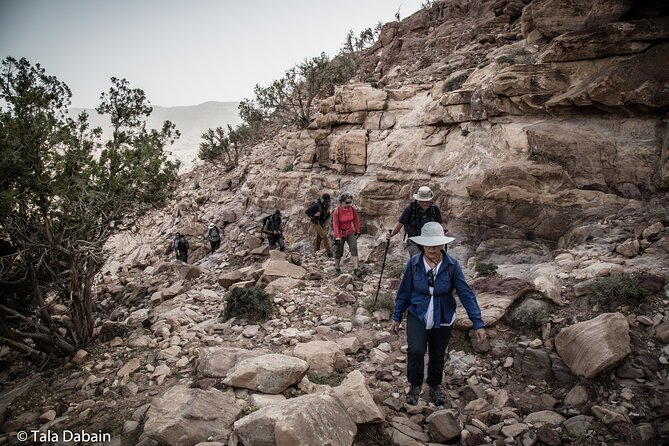
This tour is for people who can handle long hiking days for several consecutive days. The schedule is built around 5–7 hours of hiking on the main Dana trek days, with distances around 15–17 km and climbs and descents that add up.
Here are the clearly stated trekking days early on:
- Day 2: about 15 km, with roughly 260 m ascent and 690 m descent.
- Day 3: about 16 km, with roughly 563 m ascent and 170 m descent.
- Day 4: about 17.1 km, with roughly 750 m ascent and 920 m descent.
That mix matters. Day 2 has a lot of downward hiking, which can be hard on knees and shins. Day 3 flips the script with more climbing. Day 4 combines bigger climbs and bigger descents. If you train, train for both leg endurance and controlled descents.
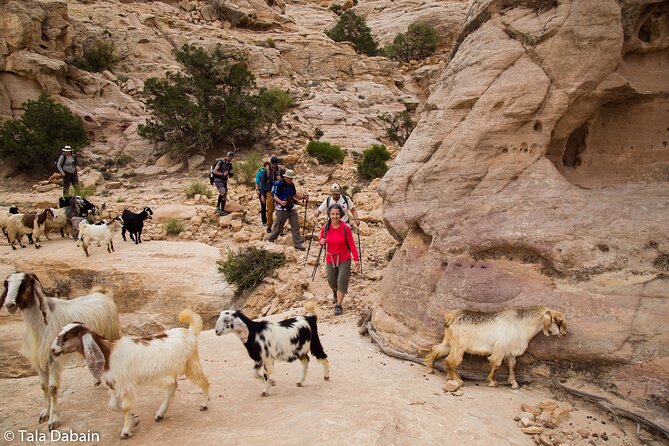
Also note the style of the walking: you’re on trails that include Bedouin shepherd paths and remote stretches through canyons and rough terrain. The tour is not marketed as “easy scenic walking,” and it’s not. It’s active.
Dana base camp nights: wilderness camping that actually helps you recover
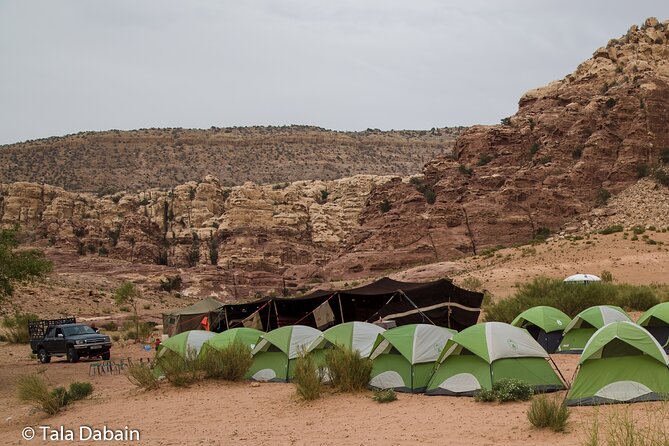
The trek doesn’t end when the hiking stops. Nights matter here, because you’re waking up to do it again.
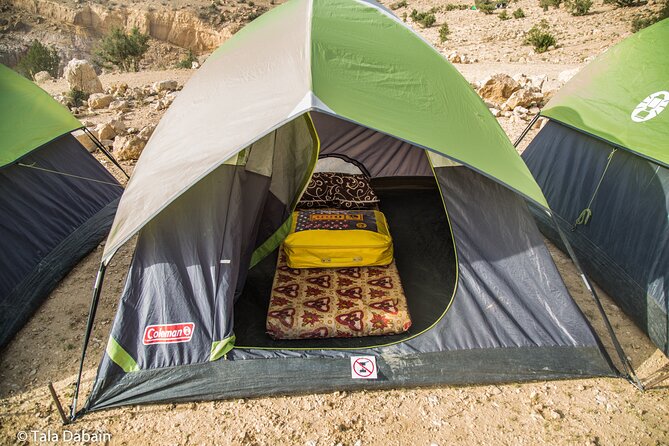
On days 2–4, you sleep in wilderness camping at different locations tied to the Dana area (Mansoura, Furon, and Ghbour Whedat). The plan includes dinner, and you’ll also get moments like sitting down with a cup of tea at camp while you enjoy the view.
That might sound small, but it’s practical. After a long day of walking, those decompression breaks help you reset for the next morning. And because luggage is moved by pickup truck, you’re not spending daylight wrangling gear. You can keep your energy for the trail.
Little Petra (Siq al-Barid): the quiet canyon walk before Petra proper
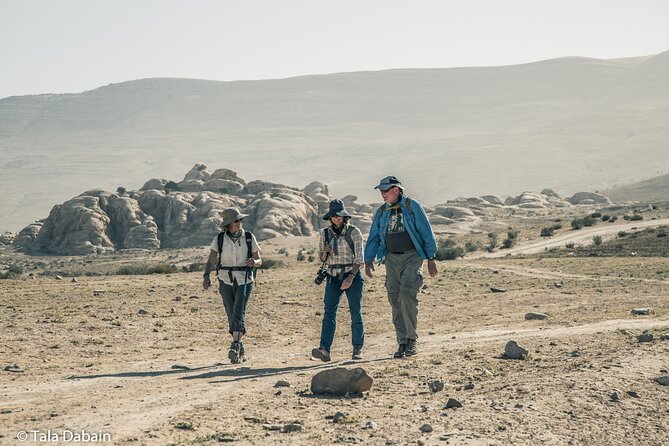
Little Petra is where the trip slows down and rewards you for paying attention. You’ll approach from an area where human settlement becomes more visible as you near the site, including signs like Bedouin camps and small agricultural plots.
You also pass Nabataean remains along the way—things like wine and olive presses, aqueducts, and older water infrastructure. This is a good day if you like history, but also good if you just like seeing how people shaped the land and how water systems made living possible in harsh terrain.
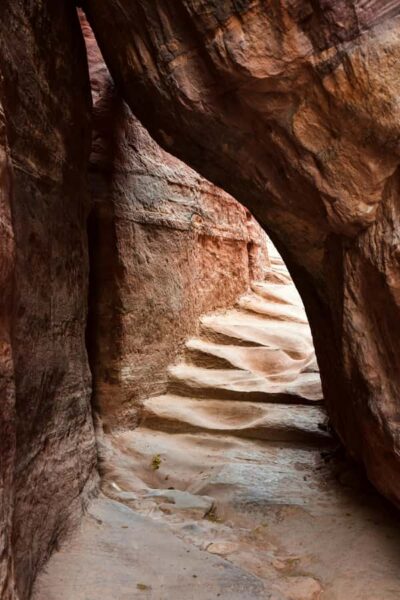
Then comes the Siq al-Barid experience: you climb through a canyon with soft sandstone walls and then descend into Little Petra via a narrow, steep set of stairs. It’s not long, but it’s physical, and the stair descent is the kind of detail that can feel harder than the distance suggests.

Entering Petra through the back door: Wadi Ghurab to The Monastery
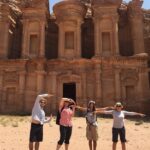
Petra is famous for a reason, but it can also be exhausting if you get stuck in crowd flow all day. This itinerary tackles that by entering Petra via a quieter route often described as the back door.
On the walk in, you follow good tracks that descend pleasantly through Wadi Ghurab. You’re surrounded by sandstone mountains that guard the approaches. Then the route follows a Nabataean line out of the valley, skirting around the final mountain on a natural rock terrace that’s been improved for walker safety.
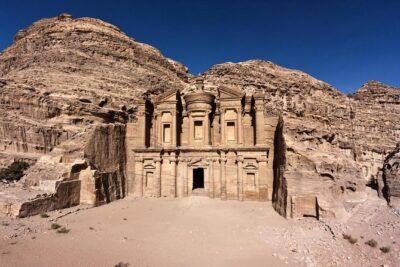
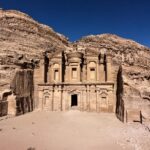
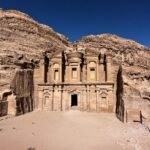
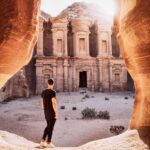
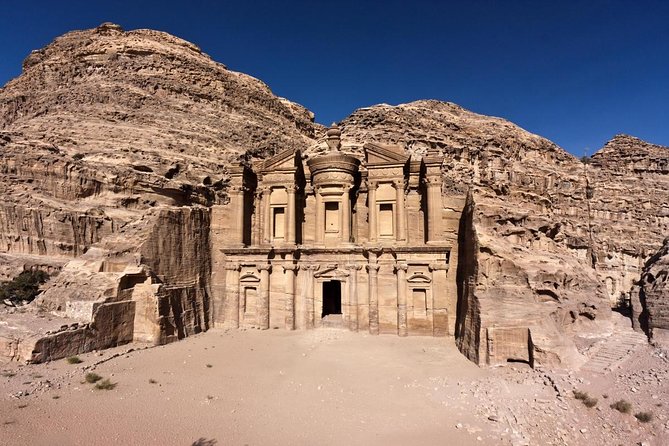
Even with that safety work, the route still narrows before it opens onto a hidden plateau above Wadi Siyyagh. From there, The Monastery area comes into view carved into the cliff face. You can pause at a Bedouin café nearby for refreshments if you want.
What I like about this setup is timing and pacing. You’re not just arriving at the landmark; you’re walking into it along a route that feels like it was made for moving through the terrain, not for processing tour groups.
Wadi Rum with Bedouin hosts: 4×4 safari plus time to scramble
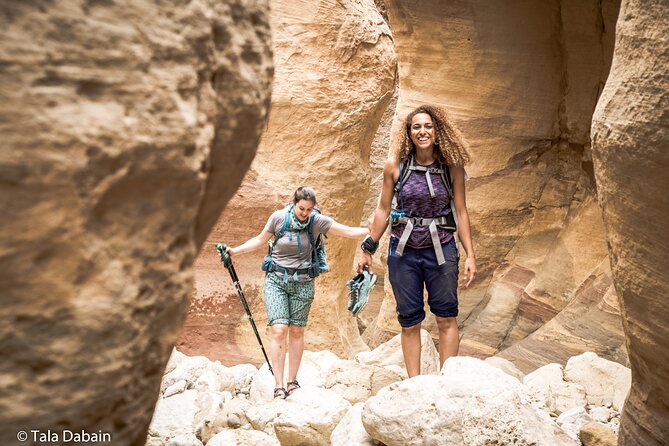
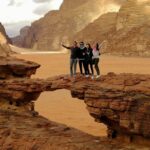
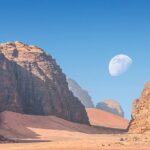
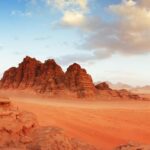
Wadi Rum is one of those places where “desert day” is the understatement. Here, you get a 4×4 jeep safari with Bedouin hosts, and you’re shown valleys and narrow gorges, plus things like ancient rock inscriptions.
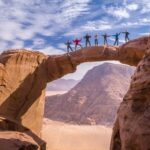
You’re also not locked into a seat the whole time. At each step, you can hike, scramble, and explore at your own pace. The day includes dune areas and features like rock bridges, and it ends with one of the best parts of the region: a sunset, then back to camp for dinner and the tea-and-starlight rhythm that makes Wadi Rum feel special.
Expect this to be a mix of motion and walking. Even if you’re mostly in the jeep for parts, you’ll still be on your feet.
Dead Sea reset day: floating, mud, and spa-style recovery
After days of hiking, the Dead Sea day is a built-in “reset.” You go to the lowest point on earth and you’ll have time to:
- float in salty water
- try Dead Sea mud
- relax by the pool
- choose spa treatments if you want them
This is the practical payoff day. If your legs are tired and sore, this is where you can experiment with a less painful kind of recovery. It’s also the one day where your body can be less of the main character and your comfort becomes part of the plan.
Then late afternoon, you return to Amman by bus for the final hotel night.
Amman start and finish: Al Balad, Jordanian food, and time on your own
You begin and end in Amman, with time to settle in downtown. Day 1 gives you a welcome window in Al Balad, plus a first hit of Jordanian cuisine. Depending on your arrival time, you may have space to explore on your own.
Amman is one of the oldest cities in the world and has lived through Bronze Age beginnings to modern life. The point for you on this trip is simple: it’s a comfortable base where you can get your bearings before long hiking days.
On the final day, you return to Al Balad in downtown Amman. If you’re flying out, the day is built to let you head to the airport with enough time.
Who this tour suits best (and who should think twice)
This is best for you if:
- you’re comfortable with multi-day hiking and can handle long days with real ascent/descent
- you want a small-group feel and prefer guided support rather than going solo
- you like walking through both famous and lesser-known sites (Little Petra matters here)
- you care about avoiding crowd-heavy entry patterns in Petra
It’s a tougher fit if:
- you’re looking for mostly flat walking
- you’re not ready for early-morning starts and consecutive hiking days
- you don’t want to manage your own hiking gear (it’s not included)
Good news for solo travelers: the tour caps group size at 14, and the overall format is designed to keep the group together while still letting you maintain your own pace on explorations like Wadi Rum.
Should you book Dana to Petra + Wadi Rum + Dead Sea?
I’d book if your idea of a great Jordan trip is active, outdoor, and grounded in authentic routes. The combination is strong: Dana hiking days that are genuinely demanding, Little Petra for the offbeat feel, Petra from a less crowded angle, Wadi Rum with Bedouin hosts, then a Dead Sea recovery day.
Before you hit book, do a quick reality check:
- Can you handle 15–17 km hikes with up to about 750 m ascent and major descents?
- Have you planned for the Jordan Pass (Jordan Wanderer) and budgeting for tips?
- Are you bringing proper hiking gear, since it’s not included?
- Can your schedule handle the fact that the trip requires good weather?
If your answers are yes, this is the kind of itinerary that turns Jordan into a story you can walk through, not just look at.
FAQ
How many people are in the group?
The tour runs with a maximum of 14 travelers, which keeps the experience more personal and easier to manage on the trail.
What’s included in the price?
Included items are 8 nights of accommodation, an English-speaking licensed guide on days 2–8, a local hiking guide with a donkey for safety on days 2–4, transport as per the itinerary, luggage transfers by pickup truck, and meals (8 breakfasts, 7 lunches, 6 dinners).
What entrance fees do I need to cover?
The Jordan Pass, listed as Jordan Wanderer (visa and entrance fees), is not included. You should budget for it separately.
What does the hiking look like in the Dana area?
The trekking days in Dana are listed as about 5–7 hours of hiking, with distances around 15–17.1 km across days 2–4, plus notable climbs and descents.
Do I need a high fitness level?
Yes. The tour specifically notes that travelers should have a strong physical fitness level.
Where do you sleep during the trek and in Wadi Rum?
You have wilderness camping during the Dana portion and pre-arranged tented accommodation. In Wadi Rum, you overnight in a Bedouin camp. You also stay in hotels in Amman.
What happens at the Dead Sea?
You spend time floating in the salty water, trying Dead Sea mud, relaxing by the pool, and you can also do spa treatments if you choose.
What if weather is bad or the trip is canceled?
The experience requires good weather. If it’s canceled due to poor weather, you’ll be offered a different date or a full refund. If a minimum number of travelers isn’t met, you’ll also be offered a different date or a full refund.
If you want, tell me your hiking background (and any knee/shin issues). I can help you judge whether the ascent/descent pattern fits your comfort level.