REVIEW · WADI RUM DESERT
From Wadi Rum: 2-Day Hiking Adventure and Jeep Tour
Book on GetYourGuide →Operated by Wadi Rum Fire Camp · Bookable on GetYourGuide
Desert stars, but with boots on. This 2-Day Wadi Rum Hiking Adventure and Jeep Tour mixes easy walking with a jeep route that gets you to the good rock shapes and vantage points, then slows down at night with a Bedouin-style camp under the sky. I love the way the hike centers on Al Hash Mountain (about 1700m at the high point by foot), so you’re not just driving past Wadi Rum—you’re earning the views.
Second, I like the practical all-in model: English-speaking guide, transportation around the sites, and daily breakfast, lunch, and dinner (plus tea, coffee, bottled water, and juice). And if you’ve got dietary needs, they’re set up for vegan and vegetarian friendly meals. One consideration: the experience isn’t designed for everyone—people over 70, wheelchair users, and pregnant women aren’t suitable, and you’ll still be walking in desert conditions even if it’s described as easy.
In This Review
- Key Highlights Worth Planning Around
- Wadi Rum Two-Day Format: Jeep + Guided Hiking That Actually Works
- Al Hash Mountain: The Best Reason to Choose the Hiking Version
- The Red and White Desert, Rock Bridge, The Eyes, and Spring Stops
- Rock Formations With a Story: Yellow-Red Granite, Sandstone, and Arches
- Bedouin Camp Night: Tea Welcome, Arabic Sweets, and Milky Way Watching
- Meals and Drinks: All-In Means You Can Actually Enjoy the Day
- What the “Easy Walking” Really Means for Your Body
- Private Bedouin Tent: Comfort Level You Can Expect to Appreciate
- Guides, Small Groups, and the Difference Good Explanation Makes
- Price and Value: What $115 Covers (and What It Doesn’t)
- Logistics That Save Time: Where You Meet and How You Arrive
- Who This Tour Suits Best
- Who Should Skip It
- Should You Book This Wadi Rum Hiking Adventure?
- FAQ
- How many people are in the group?
- How long is the tour each day?
- Is the Wadi Rum Protected Area entrance fee included?
- What meals and drinks are included?
- Do I need technical climbing experience?
- What’s the cancellation policy?
Key Highlights Worth Planning Around
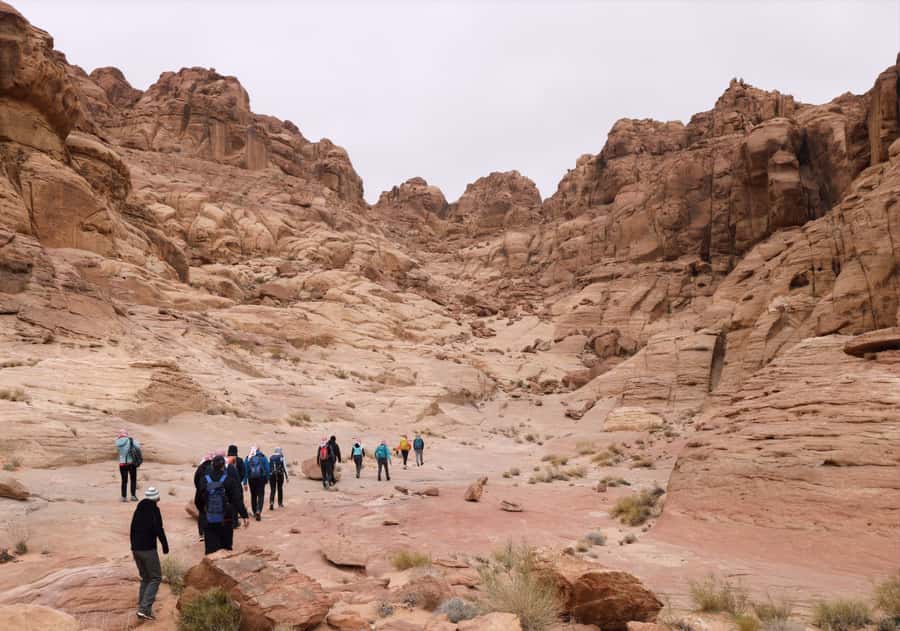
- Al Hash Mountain hike: You tackle the highest spot by hiking rather than only sightseeing from the vehicle.
- Red and White Desert viewpoints: You get time at major vista stops for that wide-open, layered-rock feel.
- Bedouin camp night inside the protected area: Private tent, tea welcome, Arabic sweets, and stargazing.
- Full meals and drinks daily: Breakfast, lunch, dinner, plus bottled water and juice.
- Small-group limit (max 8): Easier pacing and more back-and-forth with your guide.
Wadi Rum Two-Day Format: Jeep + Guided Hiking That Actually Works
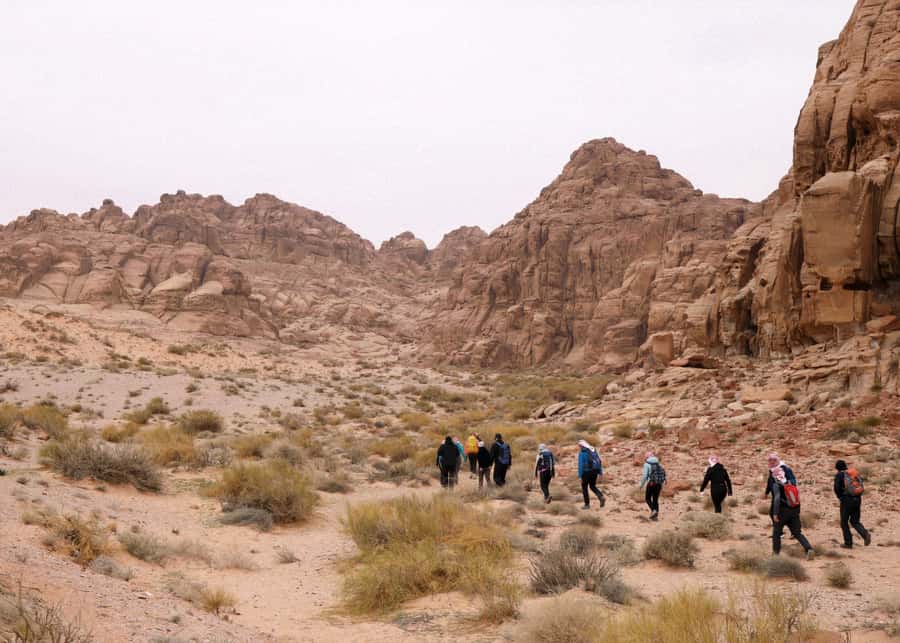
Wadi Rum can feel like a movie set when you first arrive. Then you realize the only way to see the best parts is to combine vehicle access with real walking time. That’s exactly how this 2-day/2-night style works: a guide plans the route, you drive between sites, and you walk for the key moments.
Each day runs about 8 hours. You’ll likely feel the schedule as “move, hike, rest, eat, repeat,” not as a long march. The walking is described as easy and suitable for young children and seniors alike, which matters in a place where “easy” can still mean sand and sun. If you’re the type who likes to stop for photos, ask questions, and take your time, this format fits.
You can also read our reviews of more tours and experiences in Wadi Rum Desert.
Al Hash Mountain: The Best Reason to Choose the Hiking Version
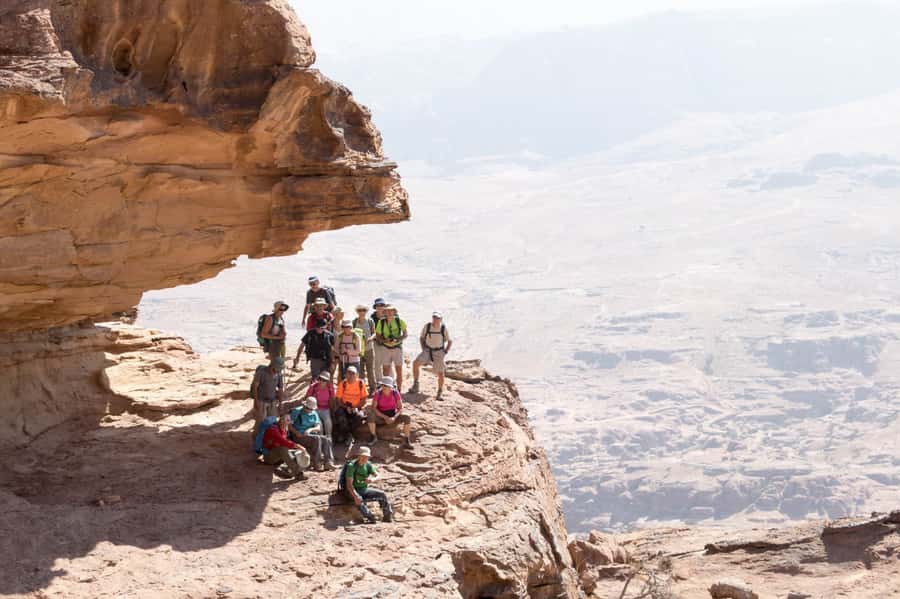
The headline hike is across Al Hash Mountain, close to the Jordanian–Saudi Arabian border and inside the Wadi Rum Protected Area. The high point is about 1700m above sea level by hike, which is one of the best ways to get your eyes up and your sense of scale correct.
Even without technical climbing, a mountain hike in a desert landscape has its own rhythm. You’ll want comfortable shoes and clothes you can move in, and you’ll probably walk at a steady pace with stops for viewpoints. The big value here is perspective. From lower ground, Wadi Rum is all texture. From a higher spot, you start seeing how the rock formations, ridges, and valleys connect—so it stops being just pretty and becomes understandable.
If you’re choosing between a purely jeep-based outing and this hiking-adjacent version, the hike is what gives you the day’s “I remember that moment” peak. It’s also why the group stays small.
The Red and White Desert, Rock Bridge, The Eyes, and Spring Stops
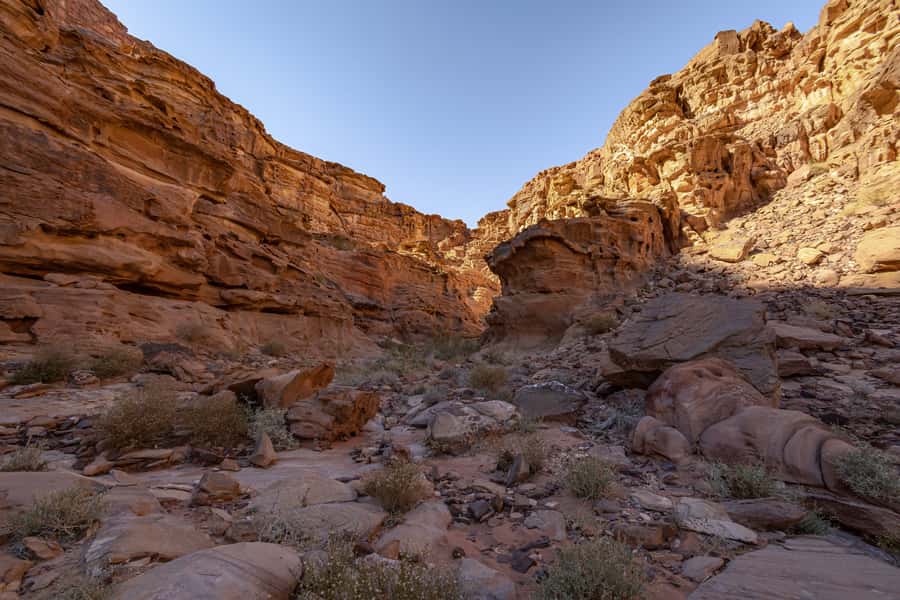
Wadi Rum isn’t one place. It’s a collection of shaped rock zones, each with its own mood. Over the two days, your guide takes you through standout features like Red and White Desert areas, Rock Bridge, the Eyes, and Elqetter Spring.
Here’s why these stops matter beyond Instagram angles:
- Rock Bridge-type formations help you see how erosion and time create natural architecture. Your guide can tie what you’re seeing to the broader story of Wadi Rum’s rocks.
- The Eyes gets its name from visible shapes in the rock, and the best way to experience them is by viewing from different angles as the guide moves you through the area.
- Elqetter Spring is the kind of stop where you notice the desert isn’t only dry and dead. Even small water sources change how wildlife and plants show up around them.
You’re also given context on what’s physically behind the colors. The tour highlights formations shaped over billion years, with hues influenced by minerals and iron oxides—so you’re not only learning names of places, you’re learning how those places got that look.
One practical tip: plan to take photos quickly, then listen. The guide’s explanations give your photos meaning later.
Rock Formations With a Story: Yellow-Red Granite, Sandstone, and Arches
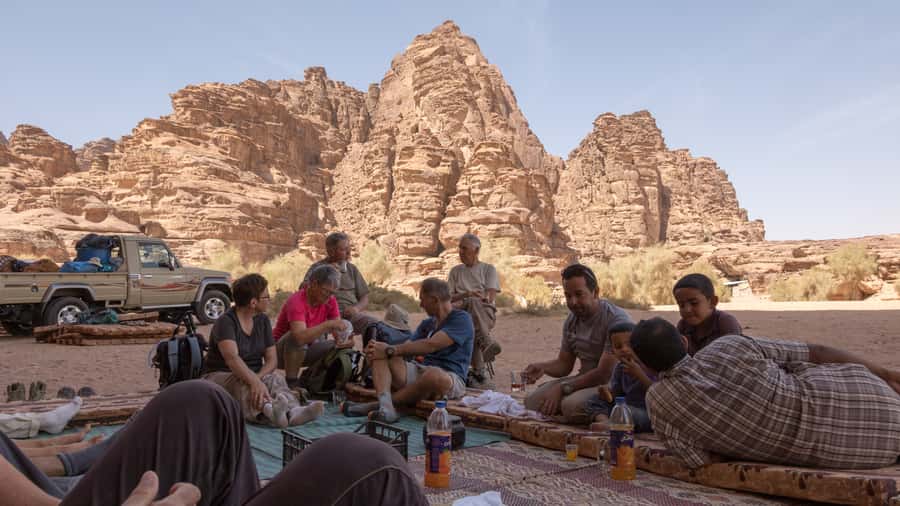
One of the best parts of a guided Wadi Rum trip is that the guide doesn’t treat the desert like a blank screen. You get pointed at textures and then a reason pops into place.
This itinerary emphasizes rock colors and types such as yellow-red granite rock and sandstone, plus curving arches. If you’re the type who wonders why some cliffs look smooth and others look jagged, this is where you get answers. Your guide connects what you see to the protected area’s ecology and history, including how wildlife fits into the desert’s rhythm.
The value for you is simple: when you understand the terrain’s “logic,” the trip stops being a series of scenic stops and becomes a guided walk through a real geologic timeline.
Bedouin Camp Night: Tea Welcome, Arabic Sweets, and Milky Way Watching
The star moment isn’t just the sunset. It’s the nighttime shift from daytime heat and motion to stillness.
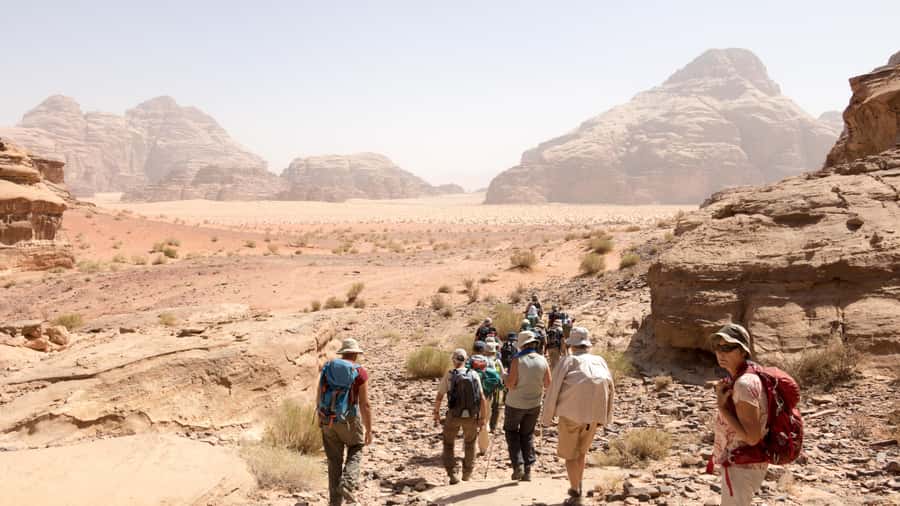
At camp, you’re greeted with Bedouin tea and Arabic sweets, along with a welcome atmosphere that feels social without turning into a show. The day winds down with stories among travelers and camp time that gives you room to ask questions. And then there’s the main event: watching the milky way overhead.
This is where the “protected area” detail matters. Being inside the Wadi Rum protected zone means you’re not stuck in a random roadside camp where the night feels washed out. Stargazing in the desert works because the air is clear and the sky gets room to be the sky.
Food is part of this too. You’ll get dinner, and the next morning starts with breakfast included. One of the strongest practical appeals here is that you don’t have to think about logistics after a long hiking day—you eat, rest, and recover.
Meals and Drinks: All-In Means You Can Actually Enjoy the Day
A lot of desert tours say they include meals. This one spells it out clearly: breakfast, lunch, and dinner daily, plus drinks like bottled water and juice, and also Bedouin tea and coffee.
Why this is valuable for you: in a remote area, food and water decisions can turn into distractions. With the all-inclusive setup, you can focus on timing, walking, and the changing light on rock faces. It also helps with pacing. You’ll have energy for the next hike segment instead of trying to ration what you brought.
They also note vegan and vegetarian friendly options, which is a big deal if you’re used to hunting for food in rural settings.
What the “Easy Walking” Really Means for Your Body
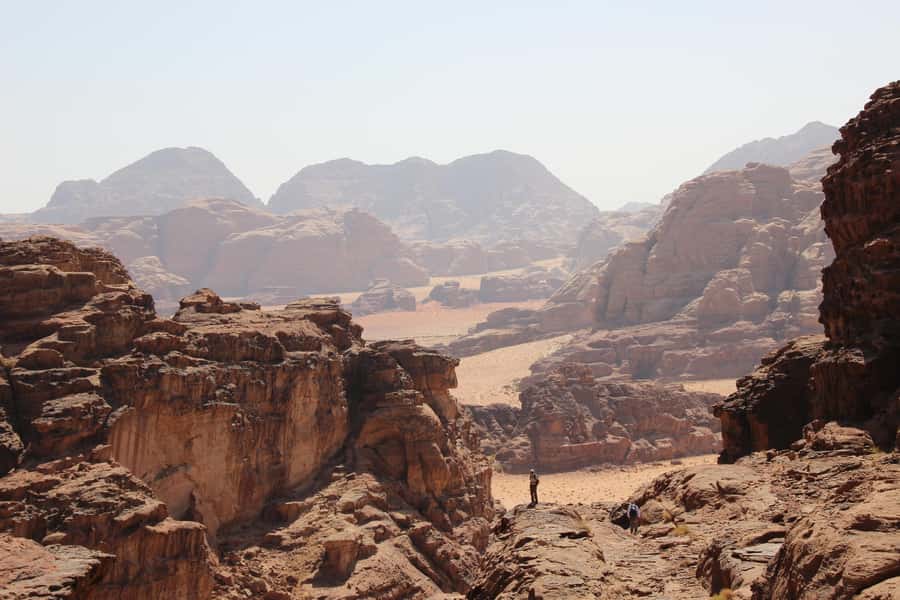
They call it easy walking, and that’s encouraging—especially if you’re traveling with mixed ages. But desert walking has a few built-in realities:
- You’ll still be moving for hours across uneven ground.
- Sun and dry air mean you’ll want to take breaks when your guide suggests them.
- Comfortable shoes matter more than you’d think.
If you’re planning this for seniors, the tour’s small-group nature (max 8) helps keep the pace flexible. If you’re bringing kids, the combination of jeep transfers and walking segments helps break the day into manageable pieces.
If you’re sensitive to heights or long uphill stretches, know that the main hike targets the mountain high point. You don’t need technical climbing skills, but you should be prepared for a sustained uphill effort.
Private Bedouin Tent: Comfort Level You Can Expect to Appreciate
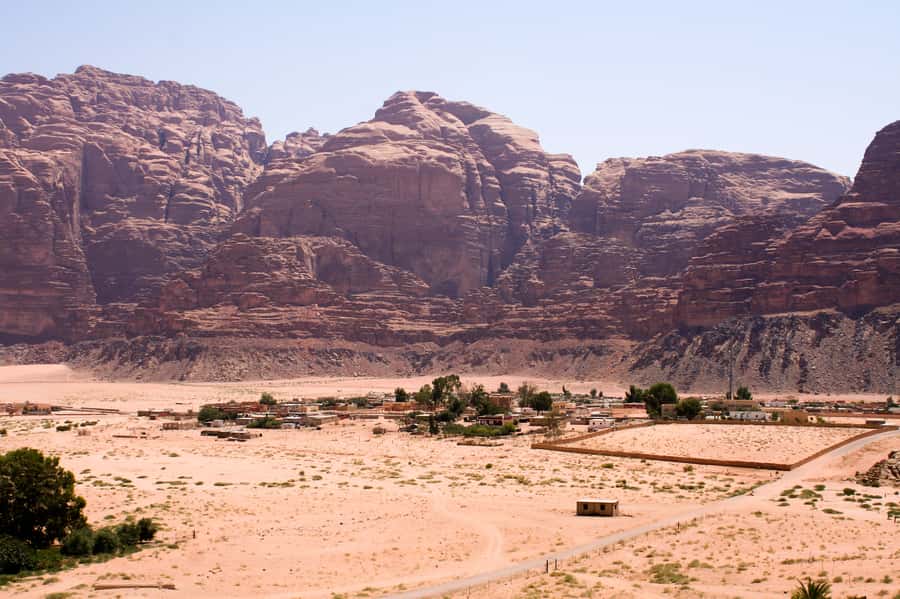
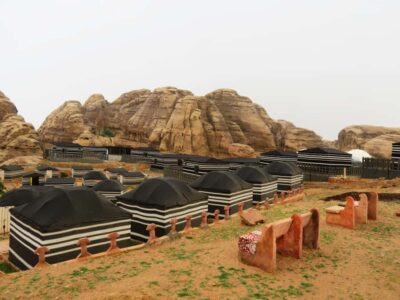
Your accommodation is one or two nights in a private Bedouin tent inside the Wadi Rum Protected Area, depending on the option you pick. You’ll have breakfast, lunch, dinner, and drinks provided daily.
A tent stay in Wadi Rum isn’t “hotel luxury,” but this is one of those situations where that trade-off makes sense. You’re not booking a room for the curtains. You’re booking the quiet, the stars, and the feeling of being in the desert rather than touring it like a parking lot.
The reviews also back up that the camp setup is clean and comfortable. Even with minimal gear compared to city hotels, the setup is designed so you can focus on the night and the next day’s views.
Guides, Small Groups, and the Difference Good Explanation Makes
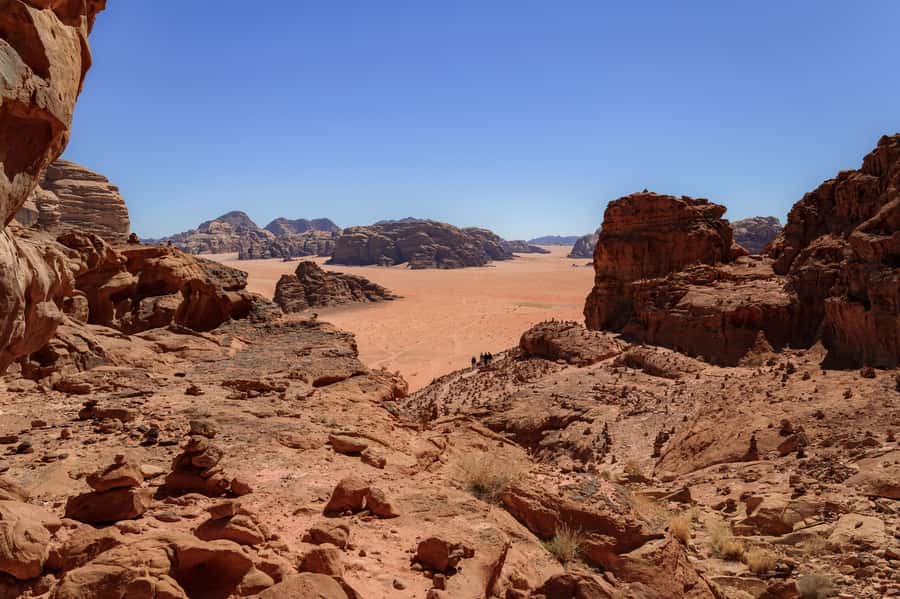
The tour runs with an English-speaking guide and driver, and languages include English and Arabic. Small group size (maximum 8) changes how the day feels. You don’t spend your time waiting for everyone to catch up, and you can actually hear answers to your questions.
The guiding quality is repeatedly highlighted in the feedback, including excellent guide teams such as Yosef and Salim. That matters because Wadi Rum is complex. If your guide only points and moves, you miss half the meaning. When your guide explains the wildlife, ecology, and how the rock formations formed, you come away with understanding you can carry beyond your photos.
Price and Value: What $115 Covers (and What It Doesn’t)
The price shown is $115 per person for a 2–3 day experience. On paper, that might sound straightforward. In practice, value comes from what’s included versus what you’d otherwise pay for.
Included value in your day:
- English-speaking guide and driver
- Jeep and transportation to the sites
- Bedouin tent accommodation inside the protected area
- All meals daily (breakfast, lunch, dinner) plus tea/coffee and juice/water
- All fees and taxes
Not included:
- Wadi Rum Protected Area entry: 7 JD (or free with Jordan Pass)
- Personal expenses
- Hotel pickup
So here’s the smart way to look at it: you’re paying for guided transport + meals + camp inside the area. If you’re already paying for separate dinner and separate camp and separate guiding, this starts to feel like a “bundle deal” that’s easier on both your time and your budget.
If you have a Jordan Pass, you’ll likely save on the 7 JD entry fee. Either way, make sure you plan for the protected area entrance if you don’t already have the pass.
Logistics That Save Time: Where You Meet and How You Arrive
The meeting point is Wadi Rum Rest House in Wadi Rum Village, about a 6 km drive from the Wadi Rum Visitor Centre. When you arrive at the Visitor Centre, you’ll need to show your Jordan Pass or pay 7 JD entry fee. Then you keep driving down the single road to the village.
If you’re using buses, there’s a helpful note: if you arrive by Jett bus or you have no transport, you can arrange free pickup from the Visitor Centre or from Memories Aicha Luxury Camp. Other local buses can go straight to the Rest House, and if you need pickup somewhere else, you should ask at reservation time.
One more practical note: if you can’t arrive at the exact time, you can show up any time before 7pm, then the next day starts the tour.
Who This Tour Suits Best
This trip makes the most sense if you want:
- A mix of jeep access and real walking time, especially the Al Hash Mountain hike
- A guided experience that explains rock formations, ecology, and desert culture
- A simple, all-in day structure with meals and a Bedouin tent night
- A small-group pace that doesn’t feel like a cattle line
It’s also a strong fit for couples or small groups who don’t want to spend hours negotiating logistics after arrival.
Who Should Skip It
Based on the tour’s own limits, it’s not suitable for pregnant women, wheelchair users, and people over 70. Also note it requires a minimum of two adult reservations for ages 12+.
If you’re unsure about health or mobility, it’s worth thinking hard about the desert hiking effort even if it’s described as easy.
Should You Book This Wadi Rum Hiking Adventure?
If you care about more than just driving through Wadi Rum, I think you’ll like this. The Al Hash Mountain hike, the named formation stops like Rock Bridge and the Eyes, and the fact that your meals and tent stay are handled for you make it a smart use of limited time in Jordan.
Book it if you want a guided desert story you can feel in your legs and see in the sky. Skip it if you need hotel-style accessibility or if you can’t manage walking in desert conditions.
If you do book: wear shoes you trust, pack a light day outfit you can move in, and plan to be present at night. The milky way moment is the payoff you’ll remember when the hiking is done.
FAQ
How many people are in the group?
The tour runs as a small-group experience with a maximum of 8 participants.
How long is the tour each day?
The guided tour lasts about 8 hours per day, and it’s offered for options that cover 2 days (and sometimes 1 extra night depending on the option).
Is the Wadi Rum Protected Area entrance fee included?
No. Entry costs 7 JD unless you’re using a Jordan Pass.
What meals and drinks are included?
Breakfast, lunch, and dinner are included daily, along with bottled water, juice, Bedouin tea, and coffee.
Do I need technical climbing experience?
No technical climbing is required. The walking is described as easy.
What’s the cancellation policy?
You can cancel up to 24 hours in advance for a full refund. There’s also a reserve now & pay later option shown.