REVIEW · AQABA
4 Hour Jeep Tour (morning or sunset) – Wadi Rum Desert Highlights
Book on Viator →Operated by Wadi Rum Desert Dreams · Bookable on Viator
Wadi Rum is a place that hits fast. This small-group half-day jeep tour shows you the key sights in hours, from camel drinking spots and old inscriptions to classic red-sand viewpoints, with time to breathe and ask questions. You also get a true Bedouin-style break with tea included along the way.
I especially like two things: the small group size (capped at 15) and the way the route balances big scenery with real desert details. One moment you’re watching water trickle at Lawrence Spring, and the next you’re stepping into Khazali Canyon’s narrow passage where carved marks from different eras still sit on the stone.
One consideration: the experience can feel more about the driving and timing than the explanations. A few guides are more talkative than others, so if clear English storytelling matters to you, I’d come with a few specific questions about what you’re seeing.
In This Review
- Key things to know before you go
- Why this Wadi Rum jeep tour is worth your half-day
- Where you start: Wadi Rum Rest House meeting point
- Off-road Jeep time: the fun part that also saves energy
- Lawrence’s Spring: mossy water, camel hangouts, and carvings on the rock
- Khazali Canyon: where caravan routes meet old inscriptions
- The red-sand dune: the classic climb and the fun way down
- Little Bridge: an easier climb with photo payoff
- Umm Fruth rock bridge: the iconic photo stop
- Canyon walk (morning) or sunset viewpoint (sunset)
- Morning option: Abu Khashaba Canyon walk
- Sunset option: the best hour in Wadi Rum
- The Bedouin tea moments: small break, big meaning
- Price and value: what you’re really paying for
- Who should book this tour
- What to bring so your dune climbs feel safer
- Should you book the 4-hour Wadi Rum Jeep Tour?
- FAQ
- How long is the Wadi Rum jeep tour?
- What’s the group size limit?
- Is tea and bottled water included?
- Where do we meet?
- Is this a morning or sunset tour?
- Do you get off-road Jeep access?
- Is the Visitors Center transfer included?
- What’s the cancellation policy?
Key things to know before you go
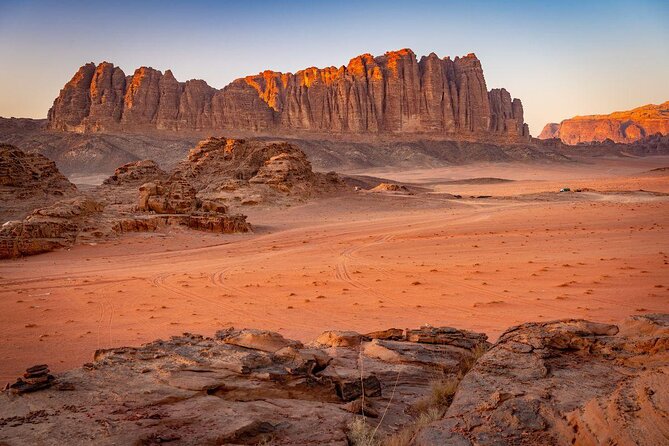
- Max 15 people keeps the stops feeling personal instead of frantic.
- Tea and bottled water are included, which matters in a desert day.
- You get real off-road access by Jeep through the protected areas.
- The route hits standout sites like Lawrence Spring, Khazali Canyon, and major bridges.
- The final hour changes by option: canyon walk (morning) or sunset viewpoint (sunset).
- You’ll often get photo help on the big climbs, but the pace is still outdoors and active.
Why this Wadi Rum jeep tour is worth your half-day
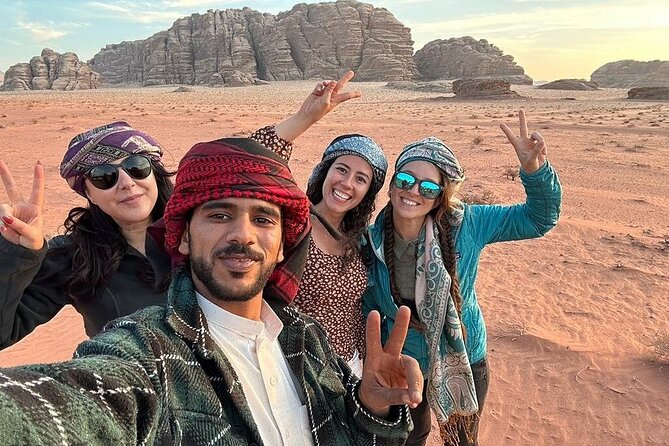
If you only have a few hours in Wadi Rum, this kind of tour is how you make it count. You’re not just looking at sand from one angle. You bounce between dramatic spots—springs, canyons, bridges, and dunes—so you see how varied the desert really is.
What also makes this work is the length. At about 4.5 hours, it’s long enough for the famous hits and short enough that you’re not exhausted by mid-afternoon. And because it’s kept to a small group, the guide can adjust when someone wants extra time on a climb or a photo.
You can also read our reviews of more tours and experiences in Aqaba.

Where you start: Wadi Rum Rest House meeting point
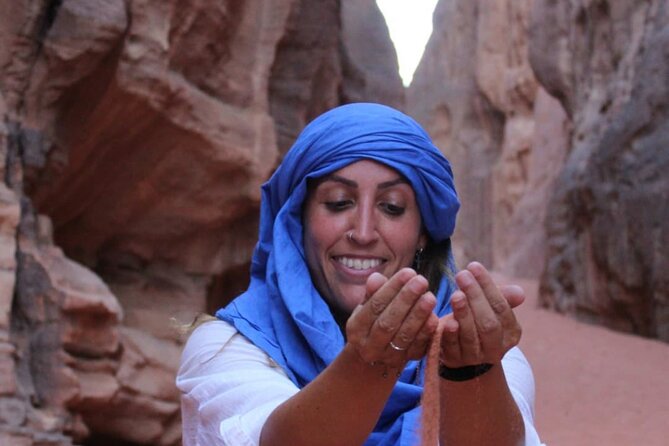
You’ll meet at the Wadi Rum Rest House in Wadi Rum Village. It’s easy to find once you enter the village—there’s a supermarket and a souvenir shop nearby, and the office is just around the corner.
For the morning option, the tour starts around 10:00 after everyone arrives and checks in. Since the tour includes transfer to and from Wadi Rum Village, you’re usually not trying to figure out transport arrangements in the middle of your day.
Practical tip: wear something you can climb in. A lot of these stops include uneven rock and sand where you’ll want solid grip.
Off-road Jeep time: the fun part that also saves energy
The whole point of a Jeep tour here isn’t luxury—it’s access. Roads don’t take you to the key desert features. This route uses off-road Jeep driving to reach places most people would never reach on foot.
That off-road time also sets the tone. You’ll feel the change in terrain quickly: rocky cuts, narrow canyon entries, then open views where the wind suddenly matters. It’s also helpful if you’re traveling with kids or anyone who can’t do long walks, because you get to experience the desert without committing to a full hike.
Because the day is active, consider this your good “sweet spot” between sightseeing and physical effort. You’ll still climb sometimes, but you won’t be stuck walking between every highlight.
Lawrence’s Spring: mossy water, camel hangouts, and carvings on the rock
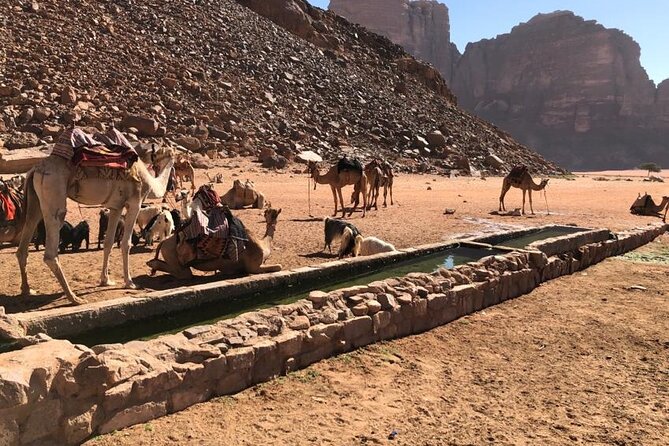
The first real nature moment is Lawrence Spring. This is a natural water source where cool water runs down from the mountains into channels below—exactly why camels make a beeline for it. In the area, you can find small trees and even patches of green moss that feel almost unreal in red desert country.
At this stop, you’re not rushing. You get time to relax and watch the flow and activity around the spring, the way Bedouin herds used to do. If you’re up for a bit of effort, you can also climb to viewpoints with visible Thamudic-origin inscriptions.
Why this stop is so valuable: it gives you a desert “logic.” Water makes life cluster, and once you see where water sits, the rest of the tour makes more sense.
Khazali Canyon: where caravan routes meet old inscriptions
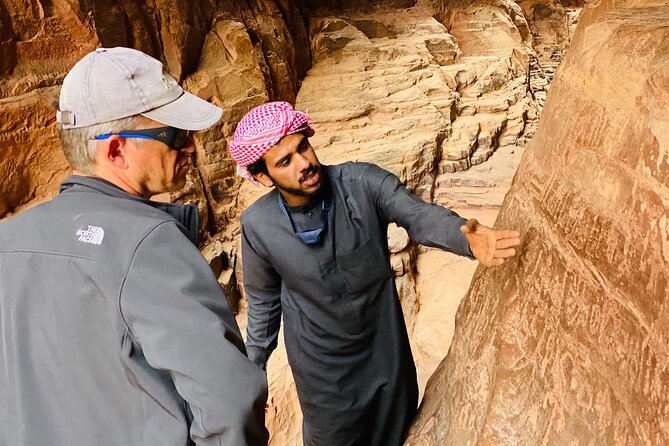
Next comes Jebel Khazali / Khazali Canyon, a place that looks like a normal mountain from outside. Step into the canyon and it’s a different world—split mountains create a narrow corridor where you can really understand how people moved through the desert.
Here, you’ll see marks and inscriptions tied to multiple periods. Carvings include Thamudic, Nabatean, and Islamic inscriptions, plus petroglyphs that show human and animal figures. There are also basins deeper in the canyon, which add another practical layer to the story of travel and stopping points.
What I like about this stop is how it connects movement to meaning. You’re not just looking at rock. You’re seeing traces of merchants traveling from Egypt toward Damascus and pilgrims continuing farther to Mecca. Even if the exact details aren’t all explained in depth, standing in the canyon gives you context fast.

The red-sand dune: the classic climb and the fun way down
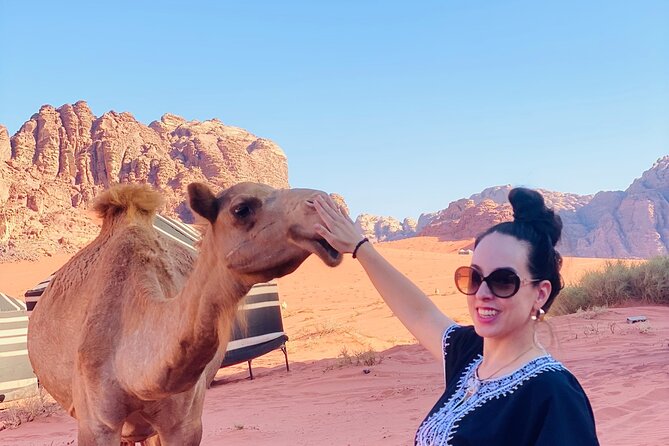
Then you hit the famous red-sand dune—the one people recognize right away. The red color comes from a high concentration of iron oxide, so it’s not just “pretty color,” it’s geology.
The climb can be deceptively hard. The sand looks like it should be easy, but it’s soft and tiring underfoot. That’s why it’s entertaining for locals to watch: tourists often end up doing a mix of careful climbing and surprised sliding.
At the top, you get the big panoramic valley views. And when it’s time to come down, the best method is either running or sandboarding, if the setup is available with your group and guide. Even without sandboarding, the descent is part of the experience.
Tip: keep your phone secured. Sand is dramatic, and it gets everywhere.
Little Bridge: an easier climb with photo payoff
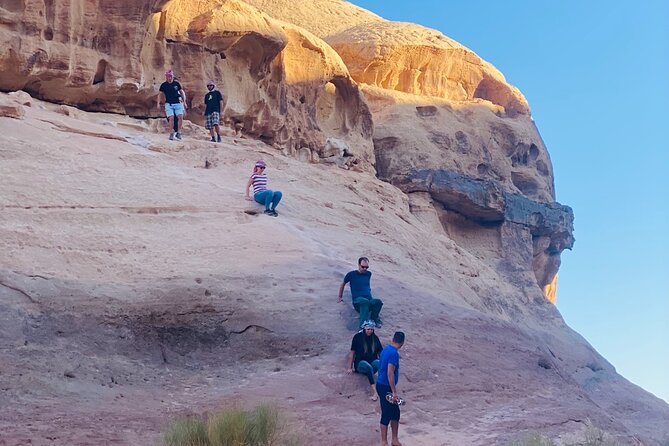
After the big dune, you’ll head toward Little Bridge in the Khor El Ajram area. This rock formation is called Little Bridge because it’s only a few meters high and easier to climb than the more famous arch-like structures.
The view from the top still feels impressive on camera. It’s also a good choice if you’re traveling with kids or with anyone who wants a short climb without turning the tour into a fitness test.
When you come back down, you get a cup of sweet tea in a Bedouin tent. You can also relax there and browse souvenirs if you want.
This stop works because it gives you the “I’m on top of the desert” moment without demanding the same stamina as higher climbs.
Umm Fruth rock bridge: the iconic photo stop
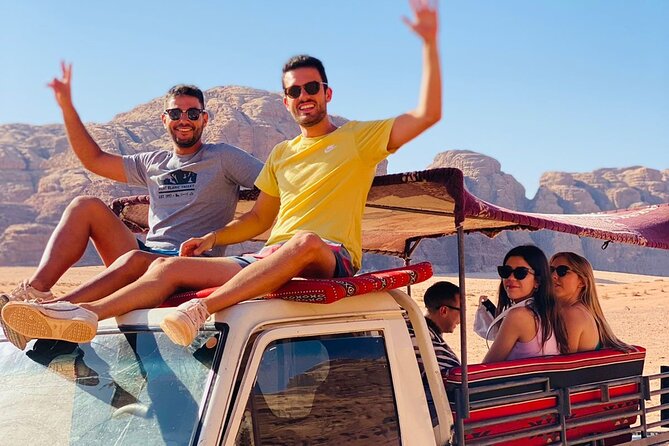
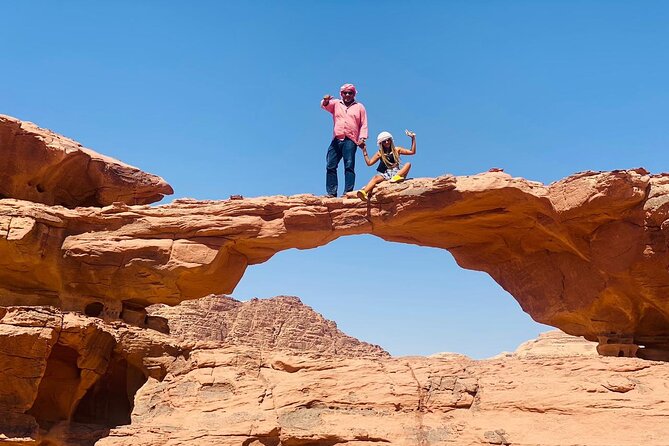
Umm Fruth Rock Bridge is a standout—about 15 meters high—and it’s famous mainly because it creates great photos. It’s not presented as a historic site in itself, but it’s the kind of place where the view and angle do the talking.
A practical detail that makes it easier: your guide will help with photography. They stay on the ground while you climb up, then take an impressive shot of you on the bridge. There are small holes in the rock to help make the climb easier for tourists.
The locals can move quickly up and down. For you, the climb is more challenging, so go slow and use the handholds.
If you’re afraid of heights, don’t pretend you’re fine. Skip it if you need to. You’ll still get plenty of memorable views from the rest of the tour.
Canyon walk (morning) or sunset viewpoint (sunset)
This is where your half-day can feel very different depending on option.
Morning option: Abu Khashaba Canyon walk
For the morning tour, you stretch your legs with a canyon walk in Abu Khashaba Canyon. It’s a deep, narrow valley with tall mountain walls and a noticeable contrast—more green and plants than you’d expect in the wider desert. You can hear birds chirping, and locals have even hung bottles to collect rainwater for birds.
The walk takes about 30 to 45 minutes, and your guide meets you on the other side. It’s peaceful and a nice change from the Jeep driving.
Sunset option: the best hour in Wadi Rum
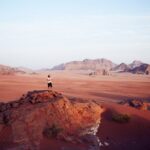
For the sunset tour, the last hour focuses on a sunset viewpoint. Wadi Rum is built for sunset—light changes fast, and the red sand turns into something else entirely. Your group heads to a secluded area for panoramic viewing.
If you hate crowds, this is one of the reasons a small group matters. You’re not fighting for space as the sky goes from bright to gold to deep color.
The Bedouin tea moments: small break, big meaning
The tour includes complimentary tea and bottled water, and that matters more than you might think. In a hot desert, hydration is not a “nice extra.” It keeps your head clear so you can enjoy the scenery instead of counting down minutes.
The tea isn’t only functional. It’s also part of the desert social rhythm. At stops like the spring and the tent near Little Bridge, you get a pause where the desert feels quieter and you can ask questions without feeling rushed.
Guide note: names I’ve seen connected to strong experiences include Tamir, Frhag, Bakhir, and Yasser. Different guides have different styles—some go deep on stories and trivia, others keep it focused on pacing and driving—so a friendly question can get you what you want.
Price and value: what you’re really paying for
At $46.41 per person, this tour is priced like a value-focused way to see the big Wadi Rum highlights without signing up for a full-day expedition. You’re paying for: the Jeep access, a guide, the small-group structure (up to 15), and included tea and bottled water.
Transfers also matter for value. Since the tour includes transfer to and from Wadi Rum Village, you avoid extra logistics costs in the middle of your day. There’s also mention that admissions for the listed stops are free (so you’re not adding a bundle of ticket fees to your day).
The only cost-like item to watch: there’s an option for Visitors Center transfer that is not included and would need booking separately at 10 JOD. If you’re starting from a different place than the village rest house, check what transport you already have before you arrive.
Who should book this tour
This is a great fit if you want Wadi Rum highlights in one go. I’d especially recommend it for:
- First-timers who want the main “wow” stops without planning your own route
- Families who want a fun mix of short climbs and Jeep time
- Anyone who’s short on time but still wants both nature and culture moments
- People who like good photo stops but don’t want a full hike day
If you’re hoping for an all-day archaeology seminar, you might be slightly underfed on deep explanations. Still, you’ll walk through canyon spaces and see inscriptions up close, which does a lot of the work for you.
What to bring so your dune climbs feel safer
Pack smart for sand and sun. I’d bring:
- Water bottle access is covered by the tour, but bring extra if you run hot
- Sunscreen and a hat
- Closed-toe shoes with grip (sand + rocks can be slippery)
- Sunglasses for driving glare
- A light layer for shade changes, especially if you’re doing sunset
If you plan to climb Umm Fruth or the dune, keep your hands free. That’s when you enjoy the photo moments instead of fighting your own gear.
Should you book the 4-hour Wadi Rum Jeep Tour?
Book it if you want a fast, high-impact Wadi Rum experience with off-road access, tea breaks, and a route that hits the iconic places in one morning or one sunset. The small-group cap of 15 is a real quality lever here, and it makes the day feel manageable.
Skip or rethink it only if you need guaranteed long, detailed narration in very fluent English. Your experience can vary by guide style, so set expectations and ask questions early.
If you’re deciding between morning and sunset: choose based on your energy. Morning gives you the calm canyon walk. Sunset gives you the best light hour in the desert.
FAQ
How long is the Wadi Rum jeep tour?
The tour runs about 4 hours 30 minutes.
What’s the group size limit?
This experience has a maximum of 15 travelers.
Is tea and bottled water included?
Yes. Tea and bottled water are included.
Where do we meet?
You meet at the Wadi Rum Rest House in Wadi Rum Village, and the tour ends back at the same meeting point.
Is this a morning or sunset tour?
Both options are available. The tour can run in the morning or at sunset, and the final hour changes to either a canyon walk (morning) or a sunset viewpoint (sunset).
Do you get off-road Jeep access?
Yes. The tour provides access through Wadi Rum’s desert valley using a Jeep.
Is the Visitors Center transfer included?
No. A Visitors Center transfer can be booked separately for 10 JOD.
What’s the cancellation policy?
You can cancel for a full refund up to 24 hours in advance. It also depends on good weather, and if canceled due to poor weather you’ll be offered another date or a full refund.