REVIEW · AQABA
Full Day Jeep Tour and Overnight in Wadi Rum
Book on Viator →Operated by Real Bedouin Experience Tours & Camp · Bookable on Viator
Wadi Rum hits harder after dark. This full-day Jeep tour turns Wadi Rum highlights—Lawrence’s Spring, dunes, canyons, and rock arches—into a do-it-for-you route, then you sleep in a Bedouin-style tent and watch the sunset fade into the stars. What I love most is the small-group cap of 12, which keeps the day feeling relaxed instead of chaotic.
I also like that the tour handles the big meals for you: lunch cooked on fire in the middle of the day, plus dinner and breakfast at camp. Your one real consideration: the Wadi Rum Protected Area entry fee (5 JD) is not included, and desert temperatures can swing hard—tents can feel hot if they stay fully closed all day.
In This Review
- Key things to know before you go
- A Day-and-Night Jeep Route That Actually Lets You Rest
- Small Camp, Real Hosts: What the Team Style Feels Like
- Stop-by-Stop: Lawrence’s Spring, Dunes, and Rock Arches
- Lunch Over Fire and the Midday Break You’ll Appreciate
- Canyons and Sandboarding at Abu Khasaba
- Um Sabatah Camp: Sunset, Dinner, Hot Showers, Stars
- Price, Value, and the One Fee to Plan For
- Packing and Timing Tips for Desert Comfort
- Should You Book This Wadi Rum Full-Day Tour With Overnight?
- FAQ
- Where do I meet for the tour?
- What time does the tour start?
- How much does it cost, and what’s the group size?
- What’s included in the price?
- What is not included?
- What kind of food should I expect?
- Are there any hands-on activities during the day?
- What will the overnight at camp be like?
Key things to know before you go
- Max 12 people means more time for questions and photo stops
- Lawrence’s Spring includes a short walk to a spring tied to Nabatean-era carvings
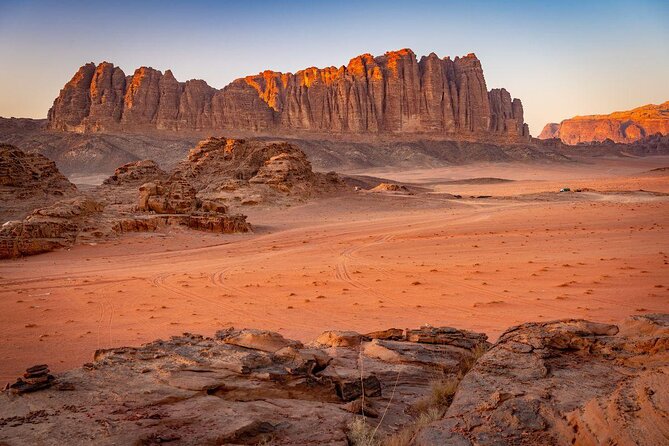
- Dune views from the Red Sand area give you big 360-degree desert perspective
- Abu Khasaba Canyon is an easy hike with a sand-boarding stop nearby (board provided)
- Bedouin camp in Um Sabatah is built for sunset and clear-night sky viewing
A Day-and-Night Jeep Route That Actually Lets You Rest
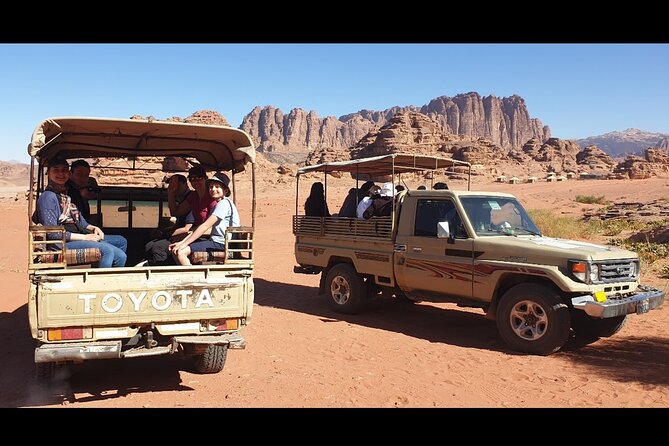
This is a smart format for Wadi Rum. Instead of squeezing in a quick tour and missing the quiet magic of the night, you get a full day of drives and short walks, then you’re already in camp when the desert shifts from hot glare to cool stillness. You also avoid the usual headache of transport planning—your meeting point is in Wadi Rum village, and the schedule is set so you can focus on the scenery and the walks.
The timing matters. You start at 9:00 am, then the itinerary keeps you moving with planned breaks—often about 30 to 50 minutes at a stop, plus a longer lunch break. Even though it’s “full day,” it’s not nonstop. The route is built around short, worthwhile stretches: a spring with views, a canyon with shaded rock art, and multiple easy photo walks like the rock bridge.
You can also read our reviews of more tours and experiences in Aqaba.

Small Camp, Real Hosts: What the Team Style Feels Like
This tour is run by Real Bedouin Experience Tours & Camp, and the standout here is how personally it’s run. Reviews point to smooth communication before you arrive—people mention quick, clear replies from Salem (and the team around him) plus on-the-ground help when you’re trying to figure out the meeting point in Wadi Rum village.
Once you’re in camp, the vibe is more “real place to stay” than “tourist set.” The camp is in the Um Sabatah area inside the Wadi Rum Protected Area, which helps explain why so many visitors talk about sunset and star visibility. People also mention hot showers and a well-kept setup that doesn’t erase the Bedouin feel.
And with a cap of 12 travelers, your guide can adjust the pace. If your group wants slightly more time climbing for photos, you usually get it. That matters on a day like this, where a couple extra minutes at one viewpoint can be the difference between rushed and memorable.
Stop-by-Stop: Lawrence’s Spring, Dunes, and Rock Arches
Your day starts with a drive out from Wadi Rum village, then the route begins with history and views right away.
Lawrence’s Spring (Ain Abu Aineh)
The first stop is a short walk up from the jeep area near Jebel Rum. If you feel like it, you can follow the pipeline up to the spring. Locals know it as Ain Abu Aineh, and the pipeline leads water to a long trough used by camels. Nearby, you’ll find a large rock with ancient carvings linked to the Nabateans (around 300 B.C.). Even if you skip the hike toward the spring, the views from up high make this stop worth it.
Red Sand Dunes and the 360-degree viewpoint
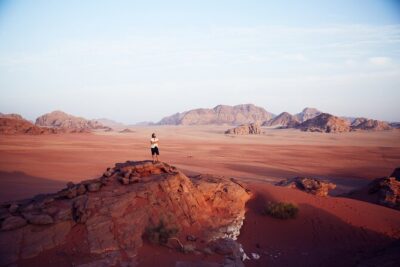
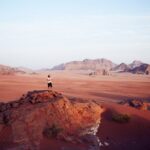
Next comes the high red dune with soft sand. You can climb to the top and reach a rocky plateau viewpoint with 360-degree desert views framed by three mountains: Jebel Rum, Um Ishrin, and Jebel Khazali. This is one of those stops where you’ll want to slow down, because the desert changes look with every step—sun angle, sand texture, and shadow lines.
Khazali Canyon (Jebel Khazali)
This is where Wadi Rum gets visually dramatic. You walk into a high-walled canyon split and sunlight filters down, creating layered shades of pink, brown, and grey. In summer the rock pools may be dry; after rain in winter, they can fill. The canyon is also known for rock art and inscriptions: Thamudic, Arab, and Nabatean, including human and animal figures and footprint-like petroglyphs, plus Kufic writing.
Little Rock Bridge (Little Arch)
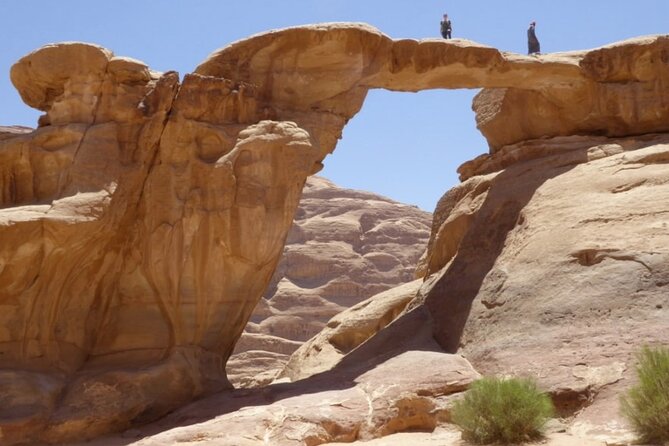
This is an easy walk to a rock bridge. It’s a great photo spot because you can stand right in the center and frame the arch from underneath. One practical note: this bridge is out in the desert (not in Wadi Rum village proper), so the jeep ride matters.
Lawrence’s House
Farther into the desert, Lawrence’s House sits near old Nabatean ruins. There’s a small Nabatean inscription nearby. People report that T. E. Lawrence stayed here during his time living with Bedouin in the Wadi Rum area. Even if you don’t obsess over the story, the wide, valley-floor views give you that strategic-feeling horizon.
Rock arches: Um Frouth and Burdah
There are two arch-focused stops later in the day. At Burdah Rock Bridge, you view the arch from the far side down in the valley; on this tour, you do not climb up to the arch itself. At Um Frouth Rock Bridge, you stop in the white desert where the arch can seem almost invisible from a distance because of similarly colored rocks. From there, many people can climb and even walk across the bridge, depending on comfort and conditions.
Chicken Rock and soft sand dunes
Near the end of the day, you get to Chicken Rock, a formation that resembles a chicken from one angle (or a cow from another). Nearby, there’s a free-standing soft sand dune with ripples made by wind, and fine tracks that can make for neat photos.
Lunch Over Fire and the Midday Break You’ll Appreciate
This is not a “snack and go” tour. Midday you pause for lunch in a cool spot when you’re visiting in warmer months. Your guide prepares food fresh—often with galayet bandora cooked over a fire—and serves it with dishes like hummus, tomatoes and cucumbers, bread, and more.
Why I think this matters: in Wadi Rum, the desert can be tiring in a hurry. Lunch isn’t just fuel; it’s time to cool down, reset your body, and stop clambering for photos. It also keeps the experience grounded and authentic, because the food is part of how Bedouin hospitality works—not a rushed roadside meal.
After lunch, you’re back on the jeep, and the route continues deeper into the desert. There’s a stop at Mushroom Rock—a formation that really does look like a mushroom and gives you a playful chance to photograph yourself “holding up” something huge.
Then you keep going toward the arches and canyon work. The itinerary is spaced so the later hikes don’t feel like a punishment; they’re short, but they hit the sights that make Wadi Rum famous.
Canyons and Sandboarding at Abu Khasaba
The hike that feels most “active adventure” is Abu Khasaba Canyon. The jeep drops you near the canyon entrance. You then walk through, with a short rocky section in the middle, while your guide drives around to meet you at the other end. The walk is generally easy, and the total time is about 35 minutes (or less if you’re fast), but the real win is that you can take your time to enjoy the cooler air and the canyon vibe.
Right when you exit the canyon, there’s a sand dune that’s perfect for sand boarding. The board is provided with the stop, and you get time to ride the dune right there. Even if you’re not a “sports person,” it’s a very Wadi Rum kind of fun—simple, quick, and directly tied to the terrain you just walked through.
If you like variety, this portion is your payoff: a canyon with shaded rock texture, followed by soft-sand play.

Um Sabatah Camp: Sunset, Dinner, Hot Showers, Stars
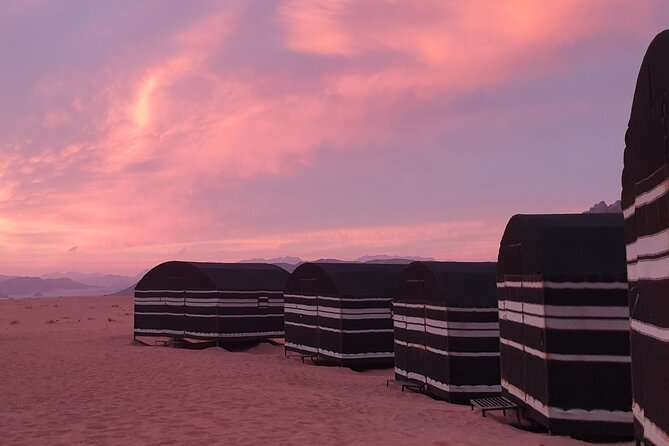
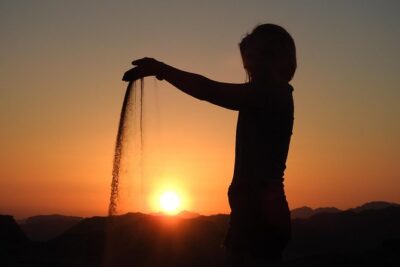
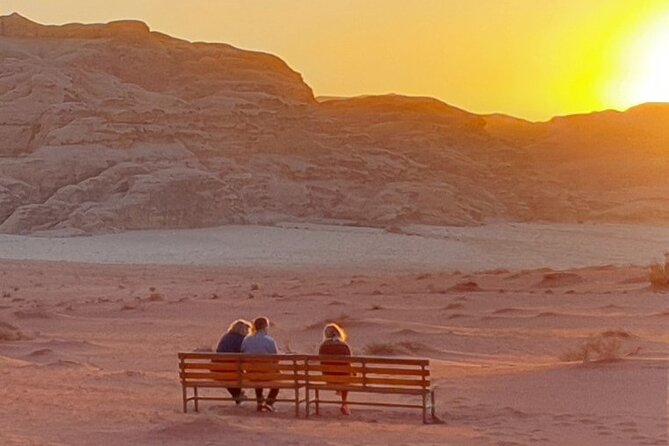
By late afternoon you head to camp and arrive in time for sunset viewing—this is a big part of the reason the overnight works so well. Your tented camp is in the Um Sabatah area, and the setup is designed so you can watch the light shift whether you’re relaxing in the dining tent or sitting out in the red sands.
After sunset, you’ll have dinner and breakfast included. Many descriptions focus on Bedouin tea first, then an evening around a fire with comfortable mats. Depending on the season, evenings can be spent inside the Bedouin tent (in winter) or outside under the starry sky (in summer). Either way, the goal is the same: give you real quiet time in the desert dark.
Comfort notes from reviews that help you plan:
- People mention hot showers (so you’re not stuck with rough-feeling hygiene after the day).
- The camp feels small and personal, not like a factory.
- Communication with Salem and the team helps people feel settled before they even get there, especially if they’re traveling solo.
One last thought: pack your patience for stargazing. Wadi Rum nights are the payoff for all that daytime driving. When the horizon fades into darkness, the silence is the feature, not the background.
Price, Value, and the One Fee to Plan For
The price is $125 per person, which is decent when you consider what’s wrapped in: lunch, dinner, breakfast, coffee/tea, bottled water, a towel, and return transfer back to Wadi Rum village. It’s also capped at 12 travelers, so you’re not paying “big tour bus” money.
That said, one fee you must budget is the 5 JD Wadi Rum Protected Area entry fee. It’s paid at the visitor center or handled with your Jordan Pass. This isn’t included in the tour price, so if you’re comparing options, make sure you’re comparing apples to apples.
I also like that you get a mobile ticket and that group discounts are available. For a solo traveler, the value comes from the included meals and sleep setup—if you had to organize those yourself, the cost and friction would rise quickly.
And if your plans change, the tour offers free cancellation up to 24 hours before start time, which is a nice safety net.
Packing and Timing Tips for Desert Comfort
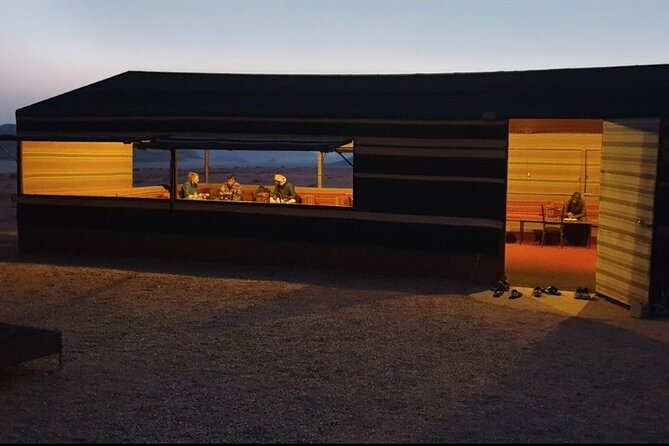
Wadi Rum isn’t just about looks; it’s about conditions. Your day includes climbs and walks, then an overnight where temperatures can swing. From the way tents are described, you should expect warmth during the day and plan to manage heat in your tent in the evening.
Here’s what I’d plan around, based on what’s mentioned:
- Light layers for daytime and something warmer for the night. (In winter, it can get cold fast.)
- Sun protection: hat, sunscreen, sunglasses. Even with walks and shaded canyon time, you’ll be exposed.
- Footwear: closed-toe shoes help for canyon rocks and uneven sand.
- Swimwear or a quick-dry layer can be useful if you want to make shower time easier.
- If you know you’ll sleep better with ventilation, bring a small option to manage tent airflow.
Most importantly: don’t treat the itinerary like a checklist. Each stop is short, but the best moments usually happen when you pause—at the plateau viewpoint, inside the canyon shade, or when you’re watching sunset line up with the ridgelines from camp.
Should You Book This Wadi Rum Full-Day Tour With Overnight?
Yes, if you want the Wadi Rum experience at the right pace—driving plus short hikes, then the starry quiet that you can’t get from a half-day tour. The combination of a capped group, included meals, and a camp location in Um Sabatah is a strong value mix.
Book it especially if:
- you prefer not to worry about transport between sites
- you want canyon walks and rock art without doing heavy planning
- you like the idea of seeing Wadi Rum twice—day and night
Skip it or consider another option if:
- you hate long days in the heat (even with breaks, it’s still a full day)
- you’re extremely budget-sensitive and don’t want to add the 5 JD protected area entry fee
If you’re doing Jordan and Wadi Rum is on your list, this format is one of the more practical ways to see the big highlights and still end up somewhere worth sleeping for.
FAQ
Where do I meet for the tour?
You meet at Wadi Rum Rest House in Wadi Rum Village. The activity ends back at the same meeting point.
What time does the tour start?
Start time is 9:00 am.
How much does it cost, and what’s the group size?
The price is $125 per person. The tour is capped at a maximum of 12 travelers.
What’s included in the price?
Included items are coffee and/or tea, bottled water, lunch, dinner, breakfast, a towel, and return transfer to Wadi Rum village.
What is not included?
The Wadi Rum Protected Area entry fee is not included. It is 5 JD and is paid at the Wadi Rum Visitor Center or can be handled with Jordan Pass.
What kind of food should I expect?
Lunch is typically Bedouin style and prepared over a fire, and includes dishes like hummus, tomatoes and cucumbers, bread, and more. Dinner and breakfast are included at the camp.
Are there any hands-on activities during the day?
Yes. At Abu Khasaba, there’s time for sand boarding, and sand boards are provided at no charge.
What will the overnight at camp be like?
You’ll have sunset time, dinner, and breakfast included. Evenings usually involve Bedouin tea and sitting around a fire, with star viewing depending on the season. Reviews also mention hot showers.