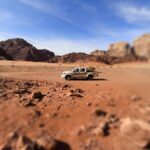
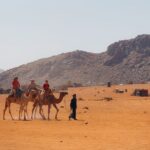
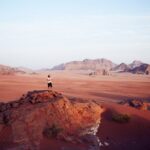
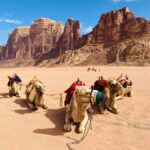
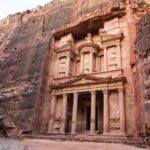
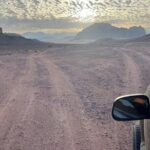
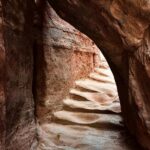
Wadi Rum hits different when you move through it by jeep. This full-day tour strings together a pile of distinct stops inside the Wadi Rum Protected Area, so you’re not just driving past dunes—you’re seeing named landmarks like the Nabatean Temple, Lawrence Spring, and Lawrence House, then finishing with desert sunset.
What I like most is the mix of geology and culture in one route: rock formations and arches you can spot from far away, plus spots tied to human history like the Ancient Map and Anfeshyah Inscriptions. Second, I love that it’s set up as a private experience for your group, so you can ask questions and keep the pace that works for you, instead of following a crowd on a schedule that doesn’t fit.
One thing to keep in mind: the Wadi Rum entrance fee isn’t included, so you’ll want to budget for that extra cost when you plan your day.
In This Review
- Quick reasons this 7-hour Wadi Rum jeep day works
- Wadi Rum in One Day: What 7 Hours Feels Like
- Price and What You Actually Get for $109
- Meet in Wadi Rum Village: The Start That Sets the Tone
- Nabatean Temple to Lawrence House: The Human Story Stops
- Wadi Rum Protected Area: Your baseline before the highlights
- Nabatean Temple: When ruins sit inside the sand
- Lawrence Spring: A name with a reason
- The Ancient Map: Details you might miss if you rush
- The Great Dune: The big sand statement
- Anfeshyah Inscriptions: The face of the rock
- Lawrence House: A quieter, lingering kind of stop
- Mushroom Rock to Abu-Khashabah Canyon: Rocks that look like they’re posing
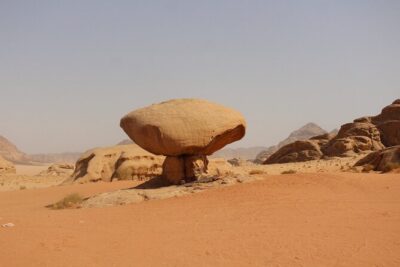
- The Mushroom Rock: A rock that fools your brain
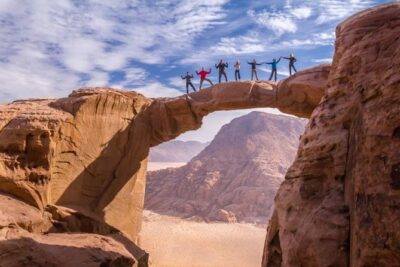
- Burdah Rock Bridge: The natural arch moment
- Abu-Khashabah Canyon: Where the day gets dramatic
- Um-Frouth Bridge and The Little Bridge: Two scales of the same idea
- Bedouin Lunch and Sunset: Why the timing matters
- Comfort Tips for a Jeep Day in the Protected Area
- Who This Tour Is Best For
- Should You Book This Full-Day Wadi Rum Jeep Tour?
- FAQ
- What time does the Wadi Rum full-day jeep tour start?
- How long is the tour?
- Is lunch included?
- Do I need to pay the Wadi Rum entrance fee separately?
- Is this a private tour?
- Where do we meet for the tour?
- Can I cancel for a full refund?
Quick reasons this 7-hour Wadi Rum jeep day works
- Private group time in the desert, with room to ask questions and take photos when you want
- Packed route of named stops such as Burdah Rock Bridge, Abu-Khashabah Canyon, and Um-Frouth Bridge
- Bedouin lunch included, plus bottled water to keep the day from feeling like a suffer-fest
- Sunset in the desert, which makes the long day feel like it has an ending worth waiting for
- Mobile ticket means less fuss once you arrive in Wadi Rum Village
Wadi Rum in One Day: What 7 Hours Feels Like
This is a 7-hour full-day jeep tour, starting at 9:30am and ending back at the meeting point in Wadi Rum Village. That timing matters. Late morning through sunset is when the desert looks dramatic and the light is photo-friendly. It also means you’ll be out long enough to genuinely feel like you saw more than one corner of the protected area.
The pace is a key part of the value. With multiple stops listed on the route, you’ll spend your time at “wow” points instead of sitting in the vehicle all day. Still, it’s a desert day, so expect some walking at each stop, uneven ground, and moments where you’ll want sunscreen, a hat, and a water plan even though bottled water is included.
You can also read our reviews of more tours and experiences in Aqaba.

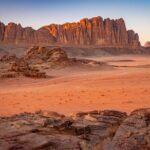
Price and What You Actually Get for $109
At $109 per person, this tour is priced like a real activity, not a quick “drive-by.” Here’s what you’re paying for in practical terms:
- You’re not doing this alone: the tour is private for your group, so you don’t have to share a guide’s time with strangers.
- Lunch is included: Bedouin lunch is built into the day, so you’re not scrambling for food during peak desert hours.
- Bottled water is included: small detail, big relief.
The one cost you should expect to add is the Wadi Rum entrance fee. The tour notes that the admission ticket isn’t included, so you’ll want to arrange payment separately. If you’re comparing options, treat that entrance fee as part of the true cost.
Group discounts are mentioned, which can make a difference if you’re traveling with friends or family and can split the total across a bigger group. Even if you’re just a duo, the private setup is often what justifies the price.
Meet in Wadi Rum Village: The Start That Sets the Tone
You’ll meet at HCG9+XW Wadi Rum Village (also listed as HCG9+XWV). From there, the day is designed to flow. A nice detail is that the experience can start with a local feel before you head out—one father-and-son trip highlighted time with a local Bedouin family in the village, including local tea, before moving on into the desert.
That kind of start does more than add a nice photo. It helps you understand that Wadi Rum isn’t just scenery. It’s a place where Bedouin culture is still part of the visitor story, not only a performance.
Bring your mobile ticket on your phone, and make sure you’re ready to show it when you arrive. You don’t want to be digging around while everyone’s waiting for the jeeps.
Nabatean Temple to Lawrence House: The Human Story Stops
This route mixes named geological sights with sites connected to older culture. Here’s what that looks like from stop to stop, and what to watch for.
Wadi Rum Protected Area: Your baseline before the highlights
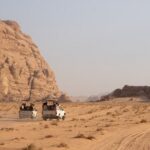
The day begins inside the Wadi Rum Protected Area, which is useful because it frames the rest of what you see. You’re not just driving through empty desert. You’re moving through a protected setting where the rock formations are the main attraction, and the route is set up to let you experience them efficiently.
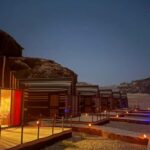

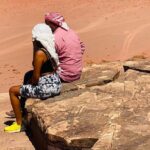
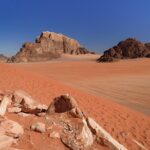
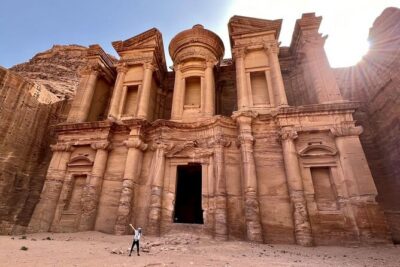
Nabatean Temple: When ruins sit inside the sand
The Nabatean Temple stop is the first big “history” moment. Even if you don’t love archaeology, the value here is how the structure reads in context. Rock and desert don’t hide it—they make it feel exposed, real, and weathered in a way you won’t get from museums. Look for how it sits against the surrounding rock and how the light hits the stone surfaces.
Possible drawback: it can feel like a short stop compared to the bigger photo spots. If you love lingering, be sure to ask your guide for extra time for questions or photos.
Lawrence Spring: A name with a reason
Next up is Lawrence Spring. A spring stop in a desert is always interesting because water changes everything. Watch for where the water would have mattered—this is the kind of location that would have shaped how people moved through the area. Even if it’s not flowing in the way you’d expect from a waterfall, the name alone signals it’s a meaningful point on the route.
The Ancient Map: Details you might miss if you rush
The Ancient Map stop is one of those places where your success depends on slowing down. If you move too fast, you’ll miss what you came for. Take a moment to look at the markings and ask your guide what they think it represents or how it’s understood locally.
A tip: when you’re at “inscription or map” stops, pause before you start photographing. Get your bearings first, then shoot.
The Great Dune: The big sand statement
Then you hit the Great Dune. This is where Wadi Rum turns into pure visuals—wind-made curves, ridgelines, and that powdery feel that makes sand look almost sculpted. You’ll want to step out at the viewpoint level and look back at the route you came from too. The dune is more impressive when you can see the scale.
Practical consideration: sand can get everywhere. Wear shoes you don’t mind getting dusty, and keep your sunglasses secured so they don’t become desert artifacts.
Anfeshyah Inscriptions: The face of the rock
Anfeshyah Inscriptions are a “read it with your guide” stop. The point isn’t only the fact that writing exists—it’s how it appears in the rock and how people used the terrain as a canvas.
If you’re someone who likes context, ask what the inscriptions are telling. If you’re more visual, focus on texture and placement. Either way, give your eyes a minute to adjust so the marks become clear.
Lawrence House: A quieter, lingering kind of stop
At Lawrence House, you’ll likely get a more grounded, human-scale feeling than at the biggest dunes. Names aside, the real value is seeing how built or carved elements fit into the harsh surroundings.
This is a good stop to take your time if the day has felt fast. It’s also a great moment to ask your guide about how people used these spaces historically, even if you only get a few minutes of explanation.
Mushroom Rock to Abu-Khashabah Canyon: Rocks that look like they’re posing
After the “human story” stops, the route leans hard into geology. And that’s why this tour works so well as a full day: you get both kinds of wonder—meaning and shape.
The Mushroom Rock: A rock that fools your brain
Mushroom Rock is a classic Wadi Rum silhouette. What I like about stops like this is how quickly your brain tries to name it. You see it from a distance first, then up close you understand the shape is all about erosion and time.
If you like photography, watch how the rock’s shadow changes as the sun shifts. Midday light is great, but you’ll also likely get a better look later in the day.
Burdah Rock Bridge: The natural arch moment
Next is Burdah Rock Bridge. Bridges and arches always feel special in deserts because they’re structural and exposed. You get a better sense of how water and weathering over long periods shaped the area.
Look around from the bridge point. The view isn’t only of the arch. It’s of the surrounding rock wall lines and the way the route threads through.
Abu-Khashabah Canyon: Where the day gets dramatic
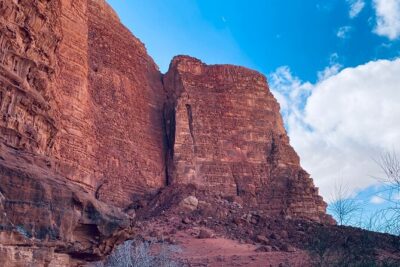
Abu-Khashabah Canyon brings depth. Canyons change sound and sightlines, and you’ll feel that right away when you’re standing inside. It’s the stop where you’ll notice wind direction and how shadows carve the ground.
If you want photos with a “you are here” feel, this is one of your better stops. But also keep it safe and steady. Canyon ground can be uneven, and you’ll likely be stepping carefully.
Um-Frouth Bridge and The Little Bridge: Two scales of the same idea
You finish this part with Um-Frouth Bridge and The Little Bridge. The value of having two bridge stops is contrast. One may feel grand from farther away; the other can be more intimate up close.
Do a quick strategy: at the first bridge, take a wide shot first. At the smaller bridge, take close-ups. It’s an easy way to capture both the big-scale wonder and the texture.
Bedouin Lunch and Sunset: Why the timing matters
The tour includes a Bedouin lunch, plus bottled water, and the schedule is built so you can enjoy sunset in the desert. That matters because sunset in Wadi Rum isn’t just a pretty ending. It’s when the whole terrain changes color, and the rock textures start to look more “alive.”
Lunch is also a reset. After moving from dune to canyon to bridge points, having a proper meal helps you stay human. This is the difference between a good tour and a tour that leaves you wrecked and craving a nap.
Practical note: desert sunset can bring a temperature drop compared to midday. Even if you’re comfortable, it’s smart to keep a light layer handy.
Comfort Tips for a Jeep Day in the Protected Area
Even with a private setup and bottled water included, you’ll enjoy this day more if you plan for desert reality.
- Wear closed-toe shoes with grip for rocky stops.
- Bring sun protection since the stops include dunes and open rock areas.
- Keep your phone battery protected if you’re taking lots of photos. Desert light eats attention fast.
- Expect some dust. A light wipe-down for your camera lens helps more than you’d think.
Also, since the entrance fee is separate, bring a way to pay or confirm what method is accepted locally. If you arrive thinking it’s fully included, you’ll end up stuck doing math in the desert.
Who This Tour Is Best For
This tour is a great fit if you want a full-day Wadi Rum experience without piecing it together yourself. It’s also ideal if you like structure: a route with named stops, not a vague “drive around and see what happens.”
It’s especially good for:
- Couples and families who want private guide time (you’ll be able to adjust the pace).
- People who enjoy both geology and cultural references in one day.
- Visitors who want sunset without worrying about timing.
The father-and-son trip story you’ll hear with this kind of tour vibe is telling. Wadi Rum is visual and it feels like an adventure, but it still works for family groups because the route is guided and the lunch breaks up the day.
Should You Book This Full-Day Wadi Rum Jeep Tour?
If you want a one-day sampler that still feels substantial, I’d book it. The strongest reasons are simple: many named stops in 7 hours, Bedouin lunch included, and the private setup that lets you move through Wadi Rum without feeling rushed by strangers. Add sunset at the end, and you’ve got an actual story arc, not just a list of pull-offs.
The main reason to hesitate is the entrance fee not being included. If that extra cost makes your budget tight, you might want to compare what other options include. But if you’re comfortable budgeting for the entrance fee, this is a solid value for a guided, all-in-one desert day.
FAQ
What time does the Wadi Rum full-day jeep tour start?
The tour starts at 9:30am.
How long is the tour?
The duration is about 7 hours.
Is lunch included?
Yes. Lunch is included, and bottled water is also provided.
Do I need to pay the Wadi Rum entrance fee separately?
Yes. The Wadi Rum entrance fee is not included (admission ticket not included).
Is this a private tour?
Yes. It’s private, meaning only your group participates.
Where do we meet for the tour?
Meet at HCG9+XW Wadi Rum Village (also listed as HCG9+XWV Wadi Rum Village, Jordan). The tour ends back at the meeting point.
Can I cancel for a full refund?
You can cancel free of charge up to 24 hours in advance for a full refund.
If you tell me your travel dates and whether you’re going solo, as a couple, or with family, I can help you judge if the $109 price (plus the entrance fee) fits your budget and comfort level.