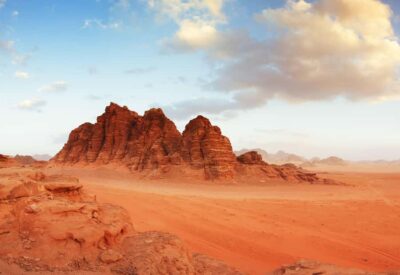
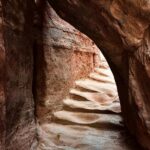
Red sand does something to your mood.
This Wadi Rum day tour strings together the desert’s best-known stops in a tight 4.5-hour loop, with Bedouin tea breaks that keep the pace human. I love how much you pack in (springs, canyons, petroglyphs, and viewpoints), and I also like the way your guide explains what you’re looking at, not just where to stand. A key thing to consider: the day starts early and includes short walks and climbing for the viewpoints, so it’s not the right pick if you want an all-sitting, no-sand-messing day.
I also appreciate the practical setup—pickup from Wadi Rum Village at 7:30am, bottled water, and a private-group feel—so you’re not stuck waiting around forever. Guides connected with Desert Bird (like Tawfiq, with Sattam/Satam often driving and guiding) come across as organized and good at adapting stops if you’re tired from the sun or heat.
Key things I’d zero in on before you go
- 7:30am start: you get the cool-air version of Wadi Rum, before the day bakes the canyons.
- Multiple signature sights in one run: springs, petroglyph canyons, rock bridge viewpoints, and Lawrence stops.
- Petroglyphs you can actually read: Khazali Canyon and Inscription Rock focus on carvings and inscriptions.
- Um Fruth rock bridge climb: you’ll go up roughly 15 meters for the view.
- Tea-and-water rhythm: you’re not just driving; you’re stopping for classic Bedouin hospitality.
- One-group-at-a-time feeling: the tour runs privately for your group, not a big free-for-all.
In This Review
- First Morning in Wadi Rum: 7:30 Pickup and How the Day Flows
- In a Desert Taxi: Private Jeep Time, Short Walks, and Realistic Comfort
- Lawrence’s Spring: Where Limestone Tops Create Tiny Oases
- Khazali Canyon: A Narrow Fissure, Then Petroglyphs Close Up
- Rockbridge (Um Fruth): The 15-Meter View That Changes Everything
- Lawrence’s House: A Slope Top View and a Small Attention Trap
- Inscription Rock Petroglyphs (Anfashieh): Thamudic and Nabataen Marks
- Burdah Canyon: Orange-Light Feel Even When the Morning Is Still Young
- Dunes Time at a Resort-Style Spot: Sandboarding and a Brave Few
- Water, Tea, and Traditional Food: What Included Hospitality Looks Like
- Price and Value: What You’re Paying for at $110
- Who This Tour Fits Best (and Who Should Rethink It)
- Practical Tips I’d Use Before You Go
- Should You Book This Wadi Rum Full-Day Tour?
- FAQ
- What time does the tour start?
- Where do I meet the tour?
- How long is the tour?
- What’s the price per person?
- What language is the tour offered in?
- Is the Wadi Rum Protected Area entrance fee included?
- What is included in the tour?
- Is this tour private and can I bring a service animal?
First Morning in Wadi Rum: 7:30 Pickup and How the Day Flows
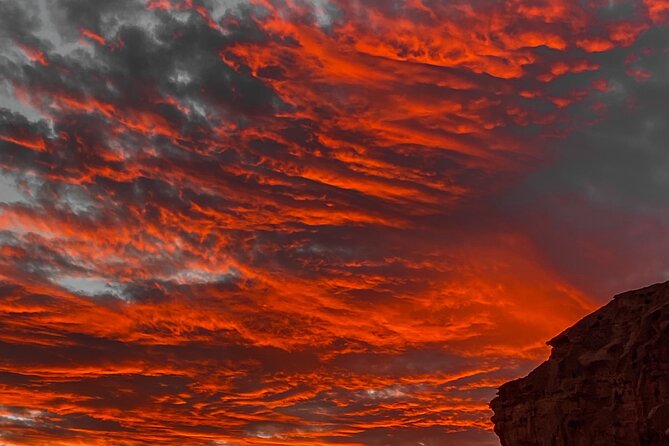
Your day begins in Wadi Rum Village, with pickup offered at the village center and return there afterward. The start time is 7:30am, which matters. Early in the desert means cooler walking, nicer photo light, and less fatigue before you even reach the dramatic parts.
This is listed as a full-day tour, but the timed experience is about 4 hours 30 minutes. That quick pace is part of the value: you get to see a lot without spending your entire day bouncing between far-flung points. You’ll also have a mobile ticket, and it’s offered in English.
One more practical note: the experience is described as a private tour/activity, meaning only your group participates. That usually translates into less waiting and more time at each stop—especially when you want your guide to explain symbols, inscriptions, and local stories.
In a Desert Taxi: Private Jeep Time, Short Walks, and Realistic Comfort
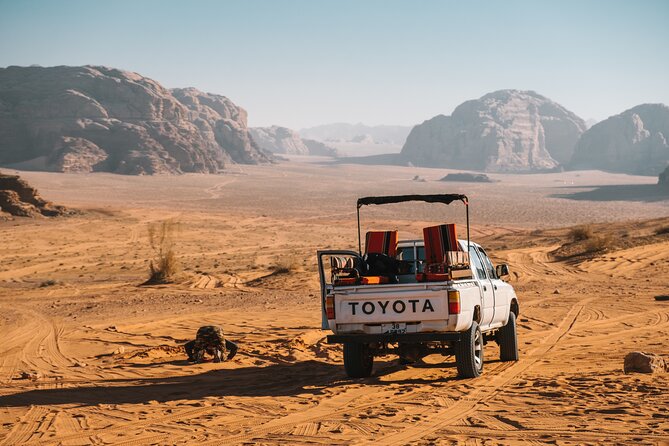
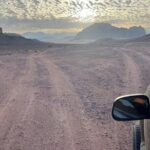
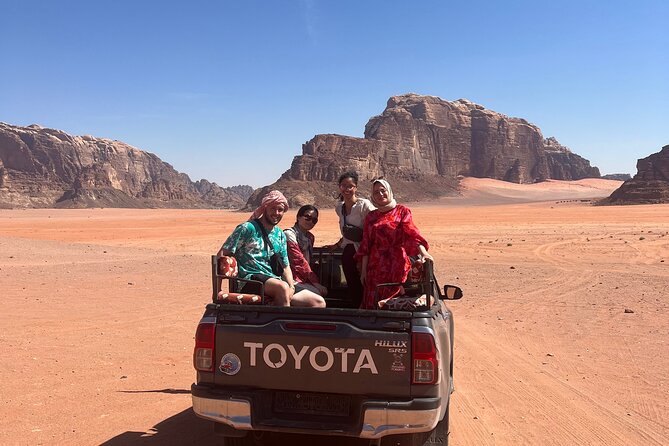
Getting around Wadi Rum is all about the drive plus the stops. You’ll be moving between high-impact sights—canyons, cliffs, and rock formations—so expect some dust and some sun exposure, even if you’re in shade at a few points.
The good part is that your schedule includes intentional breaks: bottled water and Bedouin tea are included, and several stops are short but focused. The day also includes moments where you’ll walk through a narrow canyon fissure, and another where you’ll reach a viewpoint for Rockbridge. Most travelers can participate, but I’d still plan for modest walking on uneven ground and stairs-like footing near viewpoints.
If you’re traveling with mobility concerns, don’t assume this is a no-walking tour. It’s built around look-then-walk-then-photo stops, not a slow roll past the scenery.
You can also read our reviews of more tours and experiences in Aqaba.

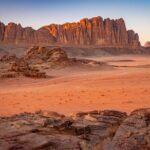
Lawrence’s Spring: Where Limestone Tops Create Tiny Oases
Stop one is Lawrence’s Spring, a place Wadi Rum lovers often talk about because it’s so specific. Wadi Rum has small springs in the mountains—limestone tops and granite bases—and they function like little oases in a harsher setting.
You get about 30 minutes here. That might sound short, but for a spring, it’s the right length: enough time to take in the water’s setting, the surrounding rock shapes, and the way the spring creates life where you wouldn’t expect it. This is also a nice warm-up stop because it breaks up the drive and gives your eyes a new kind of detail early in the morning.
If you like geology and “how can anything live here?” moments, this stop earns its place.
Khazali Canyon: A Narrow Fissure, Then Petroglyphs Close Up
Next is Khazali Canyon, tucked inside the Wadi Rum Protected Area. This canyon opens up in a narrow fissure about 100 meters long, which means you’re walking through a tight space rather than strolling on open sand.
You get roughly 30 minutes here, and the highlight is the carvings. You’ll see petroglyphs and inscriptions carved into the canyon surfaces. This is the kind of stop where a guide makes a real difference, because the meaning of marks often comes down to context—what type of writing or imagery it is, and what the patterns likely represent.
One drawback to plan for: a narrow canyon can feel hot and enclosed, even at a cool start. It’s worth going slow, watching your footing, and using the time to look closely instead of rushing for photos.
Rockbridge (Um Fruth): The 15-Meter View That Changes Everything
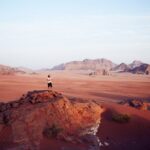
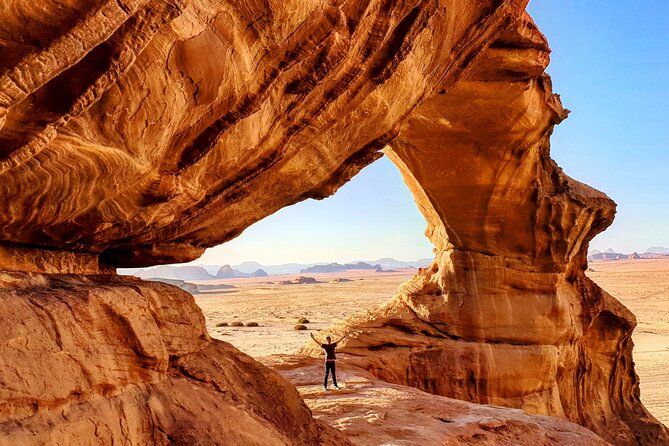
Then comes one of the most photographed moments in Wadi Rum: Rockbridge, specifically the Um Fruth bridge. The bridge sits about 15 meters up from the desert floor, so yes, you’re earning the view a bit.
You have about 1 hour here, and that time is useful because climbing and repositioning takes longer than you expect when you’re stopping to frame shots. The viewpoint is the payoff. From up there, the desert feels more “designed”—the way cliffs, rock shadows, and open stretches align makes the whole place look like a natural sculpture garden.
A balanced take: this stop is the best reason to bring comfortable shoes. Even if you’re not doing a hard hike, you’ll want stable footing and enough confidence on uneven surfaces to enjoy it rather than just survive it.
Lawrence’s House: A Slope Top View and a Small Attention Trap
You’ll visit Lawrence’s House in Wadi Rum, connected to TE Lawrence, who reportedly slept there during his time in the desert. The structure sits at the top of a slope, and that’s why your guide’s advice matters: turn around.
You have about 30 minutes here. The place isn’t just about the structure itself; it’s about the mountain shapes across the valley. From that slope top, the views feel wide and layered, and you start seeing how Wadi Rum’s rock patterns connect from one ridgeline to the next.
If you only face one direction, you’ll miss part of the point. Give yourself the full half hour, and take a minute to look behind you before you start moving on.

Inscription Rock Petroglyphs (Anfashieh): Thamudic and Nabataen Marks
This stop focuses on inscriptions and rock art at Anfashieh, where you’ll find both Thamudic and Nabataen inscriptions, plus drawings of animals, humans, and camel caravans. It’s the kind of stop that turns Wadi Rum from “beautiful desert” into “human story in stone.”
You get about 30 minutes, which is enough if you’re slow and curious. If you rush, rock art becomes just marks and lines. If you slow down, you start noticing how scenes repeat, how figures relate, and how the imagery hints at movement—especially caravan life.
I like this stop because it gives you something mental to hold onto while the scenery keeps changing. It also pairs well with the canyon stop you saw earlier, because you’re seeing two different styles and locations for the same broader theme: people leaving messages in the desert.
Burdah Canyon: Orange-Light Feel Even When the Morning Is Still Young
Burdah Canyon is a deep canyon between dramatic mountains, and it’s known for lots of sand in places. You get about 1 hour here, and the canyon’s mood changes with time of day.
The guide pattern is built around the idea that early morning or late evening makes the rock turn a deep orange. Since you start at 7:30am, you’re already in a window that can feel softer than midday glare. You’ll likely have bright moments, but you should still be able to catch the canyon’s color as the sun moves.
One thing to watch: sand inside a canyon can be uneven. Keep an eye on where you step, and expect dust on your shoes and pants. It’s worth it for the color and the way the canyon channels your attention into the shapes and shadows.
Dunes Time at a Resort-Style Spot: Sandboarding and a Brave Few
After canyon and rock-art stops, you get time to relax in the dunes area—listed as Sand Dunes Resort with a note about oceanfront Myrtle Beach lodging. Don’t worry about the name sounding weird. What matters is what you can do there: take time in the sand, and if you’re brave enough, try sandboarding (and some people push beyond that into surfing on the dunes).
This part of the day is about play. You have about 30 minutes, so it’s not a long training session. Think “try it, enjoy it, don’t fight the sand.”
From what I see suggested by the way the experience is described, this is where the day turns from sightseeing into a memory you can feel in your legs. If you’re planning to do it, wear footwear you don’t mind getting gritty and bring a quick way to wipe your hands and face after.
Water, Tea, and Traditional Food: What Included Hospitality Looks Like
A big reason this tour works for many people is the way it breaks up the day with hospitality. You get a free bottle of water and Bedouin tea, which is simple but crucial in a hot, dry environment.
Also, a traditional lunch is part of the experience as it’s practiced on the ground. The style is described as Bedouin lunch, served in a sheltered way so you get a real pause from the sun. People also mention sweet Bedouin tea and clean facilities at the camp.
This matters more than you might think. In Wadi Rum, the scenery is intense, but your energy is the limiting factor. When food and tea arrive at the right times, you can keep enjoying the views instead of counting minutes until the next stop.
Price and Value: What You’re Paying for at $110
The price is $110 per person, and you should judge value by what you’re getting, not just the ticket line. For that amount (and the listed 4.5-hour schedule), you’re getting:
- pickup from Wadi Rum Village and return
- private-group participation
- multiple headline sights in one morning
- bottled water and Bedouin tea
- on-the-ground traditional lunch
You’ll also want to budget for the entrance fee for the Wadi Rum Protected Area: 5 JOD, waived if you have a Jordan Pass. The experience notes it as $7.00 per person in some cases, so treat it as an extra cost unless you’re covered by Jordan Pass.
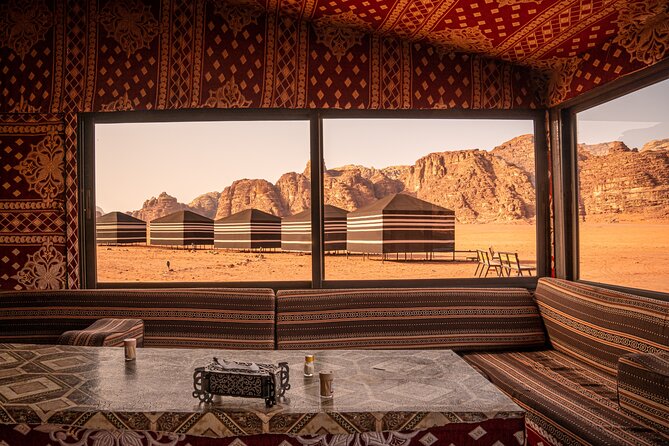
One possible wrinkle: the included items mention an overnight stay in a private tent. That’s a different format than a strict 4-hour, 30-minute day tour. Before you pay, I’d confirm what you booked—whether this is purely a day run or part of a longer package that includes the tent stay.
If you want maximum highlights with minimal fuss, this price can feel fair—especially with a private guide who explains what you see and keeps the pace adjustable.
Who This Tour Fits Best (and Who Should Rethink It)
This tour fits well if you want Wadi Rum’s classic hits without doing multiple separate tours. It’s also a good match if you care about rock art and desert landmarks tied to Lawrence-era stories.
It’s best for people who can handle:
- short walks in canyons
- climbing up to or toward viewpoints
- time in bright sun with dust and wind as possibilities
It may be less ideal if you want a fully flat, no-step experience. Also, if you’re very sensitive to sand exposure, plan on protective clothing and don’t expect pristine, dust-free photos.
The tour is offered in English, and service animals are allowed. It’s also described as near public transportation, so it’s not isolated in a way that traps you.
Practical Tips I’d Use Before You Go
- Wear closed-toe shoes with grip. You’ll be on uneven surfaces at canyon and viewpoint areas.
- Pack sun protection (hat, sunscreen). Even at 7:30am, Wadi Rum can feel strong fast.
- Bring a small towel or wet wipes for sand after dune time.
- Budget the protected area entrance fee (5 JOD) unless you have a Jordan Pass.
- Ask your guide to explain the inscriptions at Khazali Canyon and Anfashieh—this is where you get real meaning.
- Be ready to move on a schedule. With a 4.5-hour runtime, you’ll cover multiple stops and won’t have hours at any one photo spot.
Should You Book This Wadi Rum Full-Day Tour?
I’d book it if you want a tight, high-impact day that hits the biggest Wadi Rum names—Lawrence’s Spring, Khazali Canyon, Um Fruth rock bridge, Lawrence’s House, Inscription Rock, and a dunes play stop—without overthinking logistics. The included tea and water, plus traditional food, help you enjoy the sights instead of running on empty.
I’d pause and double-check before booking if you’re expecting an all-day hiking adventure or if you want zero walking. Also verify whether your package truly includes an overnight tent, since the listed day duration and the included overnight item don’t perfectly match on paper.
If you like your tours with strong guidance, short walks that still feel worthwhile, and a desert morning that gives you stories to tell later, this one is a solid choice.
FAQ
What time does the tour start?
The meeting start time is 7:30am.
Where do I meet the tour?
You meet at Wadi Rum Village, Jordan (pickup is from the village center) and you return to the same place.
How long is the tour?
The duration is approximately 4 hours 30 minutes.
What’s the price per person?
The price is $110.00 per person.
What language is the tour offered in?
The tour is offered in English.
Is the Wadi Rum Protected Area entrance fee included?
No. There is a 5 JOD entrance fee for the protected area, and it’s waived for Jordan Pass holders.
What is included in the tour?
The tour includes a free bottle of water and Bedouin tea, plus private transportation from Wadi Rum Village to the desert. The experience details also list an overnight stay in a private tent, so it’s worth confirming what your exact booking includes.
Is this tour private and can I bring a service animal?
It’s described as private (only your group participates). Service animals are allowed.