REVIEW · AQABA
Half-Day 4×4 Wadi Rum Tour
Book on Viator →Operated by Bedouin Life Style Day Tour · Bookable on Viator
Red sand, roaring engines, and tea in the desert. This half-day Wadi Rum 4×4 tour is built for people with limited time, yet it still hits the Protected Area highlights with a small group feel. You can usually choose a morning or afternoon slot, so the desert fits your day instead of taking it over.
What I like most is the mix of scenery and stops, from the big red dune climbing (and sometimes sandboarding) to canyon shade where you can actually slow down. The Khazali Canyon carvings plus the Bedouin tea break make it feel more than just a drive-by photo tour.
One drawback to plan for: the tour depends on weather, and the stops are timed tightly (about 30 minutes each). Also, the meeting point is Wadi Rum Rest House—so if you’re thinking you’ll be picked up exactly at a random parking spot, confirm where your driver stages the vehicle.
In This Review
- Key things I’d circle before booking
- Wadi Rum in half a day: what a 4×4 route really gives you
- Who this fits best
- Start at Wadi Rum Village: meeting point and pacing basics
- Stop 1: Wadi Rum Protected Area, where the big terrain starts to make sense
- Stop 2: Al Ramal Red Sand Dune and the fun part of the desert
- Stop 3: Khazali Canyon’s carvings and a cooling break with Bedouin tea
- Stop 4: Lawrence’s House and the story people actually remember
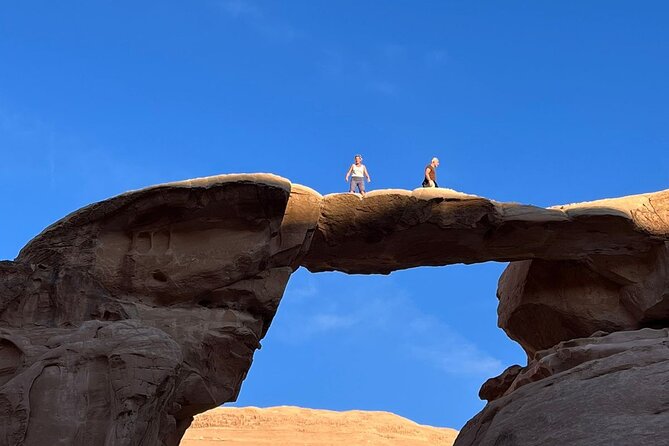
- Stop 5: Little Bridge, the easy climb that earns its view
- Guides, small groups, and why your pace matters in Wadi Rum
- Price and value: what you’re really paying for
- Timing, weather, and what to wear so the trip feels easy
- Should you book the Half-Day 4×4 Wadi Rum tour?
- FAQ
- How long is the Half-Day 4×4 Wadi Rum tour?
- Where does the tour start and end?
- How many people are in the group?
- What sights does the tour visit?
- How much time is spent at each stop?
- Is sandboarding included?
- Does the tour include tea?
- Is the tour suitable for most people?
- What happens if the weather is bad?
- Is free cancellation available?
Key things I’d circle before booking
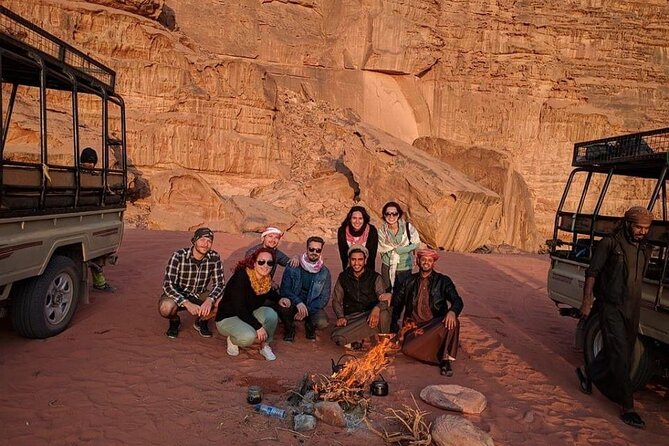
- A true highlight loop in about 3 hours: five major stops, each with time to look and take photos.
- 4×4 access to Wadi Rum Protected Area sights: rock formations, canyons, dunes, and viewpoints without logistics stress.
- Khazali Canyon’s Nabatean and early Arab carvings: plus shade when the sun gets intense.
- Al Ramal Red Sand Dune time: climb, run down, and in some cases sandboarding.
- Lawrence’s House and a desert-history connection: Lawrence’s two-week stay is part of the story you’ll hear on-site.
- Max 10 travelers: easier pacing and less crowd pressure during photo breaks.
Wadi Rum in half a day: what a 4×4 route really gives you
Wadi Rum is huge, and that’s the problem with trying to do it on your own. A half-day 4×4 tour solves the main issue: getting you to the best viewpoints and the most interesting desert features without spending your morning figuring out roads, permissions, and which track is worth your time.
This tour is designed around a simple rhythm: short drives between stops, then enough time to walk a bit, breathe in the heat/cool air, and actually look at what makes each spot special. You’re not stuck at one location either—you get red sand dunes, deep narrow canyons, a historic site linked to Lawrence, and an easy climb viewpoint at the end.
It also helps that you’re not fighting a big bus crowd. With a maximum of 10, guides can adjust to the group’s energy level, and you’re more likely to get time to catch your best angles and photos.
You can also read our reviews of more tours and experiences in Aqaba.



Who this fits best
This is a strong pick if:
- It’s your first time in Wadi Rum and you want the headline sights
- You have limited time between Aqaba and the rest of your Jordan plans
- You want a guided route without committing to an all-day adventure
If you’re the type who loves slow, long hikes and wants to explore fewer places at deeper length, you might later wish you had booked a longer Wadi Rum day or an overnight camp. But for a “see the desert properly” sampler, this tour hits the sweet spot.
Start at Wadi Rum Village: meeting point and pacing basics

You start and end at Wadi Rum Rest House in Wadi Rum Village. The tour runs for about 3 hours (roughly), and it’s offered in morning or afternoon versions. That matters because Wadi Rum light changes fast. Afternoon tours are often the better choice if you care about softer sunset colors, and you’ll also have the chance for tea at a point in the schedule when the light is more forgiving.
One small practical note: some operators don’t stage right at the most obvious parking area. If you arrive early and start roaming the village lots, don’t guess. Ask the staff where the 4×4 is waiting, or confirm you’re headed to the Rest House staging point.
Stop 1: Wadi Rum Protected Area, where the big terrain starts to make sense
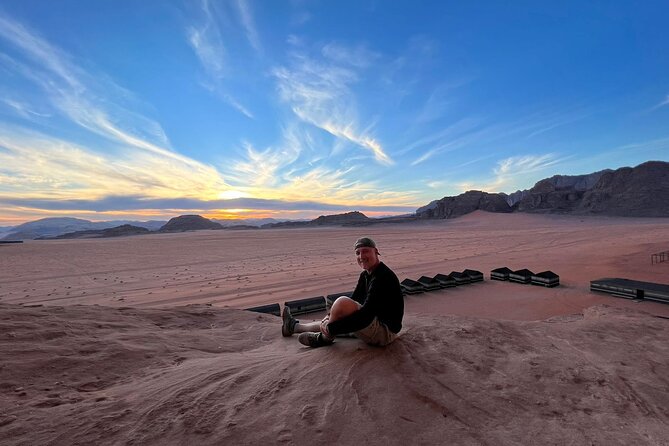
The first stop is the Wadi Rum Protected Area, the gateway where you begin seeing why this desert is famous. Expect dramatic rock formations, canyons, dunes, and natural shapes that look engineered but aren’t. Even in a short time, it’s the moment where the scale clicks—this isn’t a flat sandbox, it’s a maze of stone corridors and sand pockets carved over time.
You’ll get about 30 minutes here. That’s enough to orient yourself: find the best direction for photos, spot nearby formations, and understand how the next stops connect. The main drawback is also simple: 30 minutes goes quickly if you stop to climb and wander. Keep your feet moving, but don’t rush the first viewpoint, because it sets the tone for the rest.
Stop 2: Al Ramal Red Sand Dune and the fun part of the desert
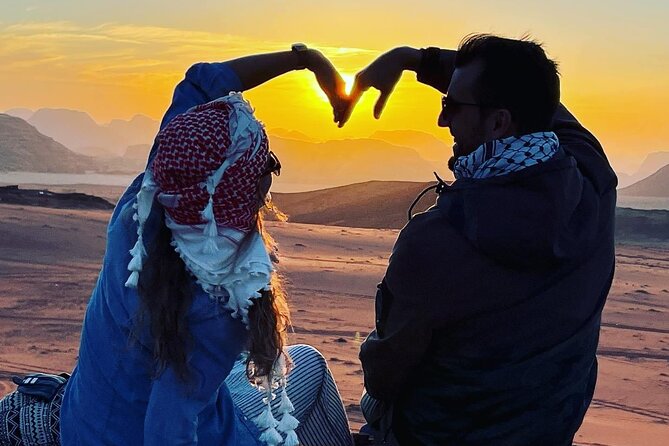
Then you head to Al Ramal Red Sand Dune, the kind of place you see in photos and still feel surprised by in person. The dune is deep red and steep enough to be challenging without being dangerous. You’ll have about 30 minutes, which is perfect for a climb and a controlled descent.
What makes this stop genuinely fun is the option to do more than just stand on top. You can climb up, enjoy that canyon-below view, and (if the conditions and guide’s setup allow) try sliding or even sandboarding. One of the best bits in the feedback I read was that sandboarding can be part of the overall experience, so if that interests you, ask at the start of your tour what’s available that day.
Practical tip: treat the sand like baby powder on steroids. It sticks to shoes and can get into everything if you’re not careful. Bring something simple to wipe off your hands/feet quickly, and don’t wear brand-new gear you hate scratching.





Stop 3: Khazali Canyon’s carvings and a cooling break with Bedouin tea

Next is Khazali Canyon, a deep, narrow fissure that feels cooler and calmer than the open dune areas. The canyon walls carry Nabatean and early Arab carvings, and the walls create a kind of natural gallery effect. It’s one of the stops where your eyes naturally slow down—you start reading details instead of just taking in wide views.
Again, you get about 30 minutes. That means you can enter, look closely at the carvings, and then step back out without feeling like you’re trapped in a half-day line.
This stop also includes a very practical reward: a nearby area for Bedouin tea in a tented cafe. It’s not just a drink; it’s a pause that helps you recover before the next viewpoint drive. Several guides are praised for being friendly and for offering tea in a way that makes you feel welcomed, not rushed.
If you go in the afternoon and the light is changing, you may even catch tea during nicer conditions. In the feedback, tea near sunset came up more than once, often with homemade snacks like biscuits mentioned in a few accounts. Even if the exact moment varies by schedule, you’ll likely get a meaningful break here.
Stop 4: Lawrence’s House and the story people actually remember
Then comes Lawrence’s House, tied to T.E. Lawrence and the broader Lawrence of Arabia story. This is originally a Nabatean structure that served as a store and rest house for Nabatean traders. Lawrence and his army spent two weeks relaxing there before moving north into Syria.
What’s useful for you as a visitor: this stop gives context. Without a guide, you might see stone structures and wonder why they matter. With a good explanation, it becomes a timeline you can hold in your head—Nabateans first, then Lawrence’s presence later, all inside the same desert geometry.
You’ll have about 30 minutes, so you can listen, look at the structure, and then move on. The only real drawback is that history is only as good as the time you spend absorbing it. If you want to get the full meaning, stay close, ask a question, and don’t let the group’s photo momentum carry you past the story.
Stop 5: Little Bridge, the easy climb that earns its view
Finish at Little Bridge, another viewpoint stop with a short walk. This one’s described as an easy climb, and that’s a good thing near the end of your half-day. Your legs will be ready for a manageable effort, and you’ll have that “one last look” moment where the desert finally feels like it’s all connected.
Expect about 30 minutes here, which usually means enough time to take pictures from a couple angles and enjoy the view without feeling wiped out. If you’re worried about stamina, this is one of the stops that tends to work for a wide range of people.
Guides, small groups, and why your pace matters in Wadi Rum
The best part of Wadi Rum isn’t just the scenery. It’s how quickly you’re able to connect to it. A small group helps, and so does a guide who keeps the pace comfortable.
In the feedback I saw, guides were repeatedly praised by name—Atallah, Ghanem, Essam, Jalal, Islam, Akram, Nahjed, and Kamal all came up. Common themes: polite, friendly service; clear communication; understanding when schedules shift (including late arrivals); and help with photos. If you care about getting good pictures, this matters because your guide can position you, point you toward the right spots, and not make you feel like you’re constantly sprinting.
Another benefit of a small group: you can take breaks without feeling like you’re slowing 30 people down. In a desert, that kind of pacing is more than comfort—it’s how you avoid missing the best light and the best moments.
Price and value: what you’re really paying for
The price shown in the details you provided lists as $0.00, which often means a promotion or a placeholder. If your final checkout shows a real price, treat this tour as a value decision based on what’s included: 4×4 vehicle time through the Protected Area plus guided stops at major sights, with short walking and tea opportunities built into the route.
The practical value here is time saved and stress reduced. Wadi Rum takes planning if you don’t have transport lined up, and the best sights are spread out enough that DIY can eat your day. Paying for a short guided loop can be a smart move when you want to experience Wadi Rum without building a logistics spreadsheet.
If you’re on a tight schedule, the math is simple: 3 hours plus five key stops is efficient. If you’re already in the area and you want the highlights, this is often better than trying to squeeze in multiple half-plans across different operators.
Timing, weather, and what to wear so the trip feels easy
This tour requires good weather. If conditions are poor, you should expect a different date or a full refund. That’s not a weakness in the plan; it’s how you keep the experience enjoyable instead of slippery and uncomfortable.
What to wear:
- Layers for temperature swings (Wadi Rum can change fast)
- Shoes with grip for sand and short climbs
- Sunglasses and sun protection for dune and canyon edges
- A small towel or wipes, because sand happens
If you go in the afternoon, you may get nicer light for photos, but you’ll still deal with sun and heat during driving and walking. If you go in the morning, the air can feel kinder for climbing and canyon exploring.
Should you book the Half-Day 4×4 Wadi Rum tour?
Book it if:
- You want the headline Wadi Rum sights without committing to a full day
- You like a guide who keeps the pace and helps with photos
- You’re okay with timed stops (about 30 minutes each) and want efficiency
Skip or consider a longer option if:
- You want long hikes and fewer stops at deeper length
- You dislike fixed schedules and you hate being on the clock
- You already plan to spend extra time in Wadi Rum and want to focus on one or two areas only
My take: for first-timers, this is one of the most practical ways to see Wadi Rum properly. You get a guided route through major features—red dune views, carved canyon walls, Lawrence’s House context, and a finishing viewpoint—all while keeping the experience short enough to fit real travel days. If the weather looks good and the timing works for you, it’s a strong choice.
FAQ
How long is the Half-Day 4×4 Wadi Rum tour?
It’s listed as about 3 hours (approx.).
Where does the tour start and end?
The tour starts and ends back at the Wadi Rum Rest House, in Wadi Rum Village, Jordan.
How many people are in the group?
The maximum group size is 10 travelers.
What sights does the tour visit?
You’ll visit the Wadi Rum Protected Area, Al Ramal Red Sand Dune, Khazali Canyon, Lawrence’s House, and Little Bridge.
How much time is spent at each stop?
Each stop is described as about 30 minutes.
Is sandboarding included?
The tour description says sandboarding is an adventurous option at the red sand dune, and at least one account mentions sandboarding as part of their tour experience. Ask your guide what’s available on your day.
Does the tour include tea?
Tea is mentioned at Khazali Canyon in a nearby tented cafe.
Is the tour suitable for most people?
The information states that most travelers can participate.
What happens if the weather is bad?
This experience requires good weather. If it’s canceled due to poor weather, you’ll be offered a different date or a full refund.
Is free cancellation available?
Yes. You can cancel up to 24 hours in advance for a full refund. Within 24 hours, refunds aren’t provided.