REVIEW · AQABA
Wadi Rum Short Tours
Book on Viator →Operated by Wild Wadi Rum Tours · Bookable on Viator
Wadi Rum is small, but it hits hard. In a compact time window, you get pulled through the Wadi Rum Protected Area with the key sights lined up so you see more than you’d manage on your own. I especially like the friendly start with Bedouin tea at the village house, and how quickly you shift from movie-famous spots to real desert details like water holes, inscriptions, and arches.
The tour also has an easy rhythm: an English-speaking guide helps you connect the dots between Nabatean carvings and what early travelers were actually looking for. One thing to keep in mind: even “short” means some walking and scrambling on uneven sand, so comfortable footwear matters.
In This Review
- Key Things I Think You’ll Care About
- Quick Reality Check: What This “Short Tour” Really Means
- Starting at Wadi Rum Village: Tea, Then Off-Road
- Lawrence’s Spring and the Movie Connection
- The Big Red Sand Dune: The Classic Wadi Rum Move
- Jebel Khazali: Nabatean Inscriptions in the Canyon
- Um Frouth Arch: Scramble Up for the Photo
- Abu Khushabah Canyon: Walk Through the Narrow Passage
- Little Rock Arch: Panoramic Views Without the Whole-Day Commitment
- Lawrence’s House: Old Caravan Route, Bedouin Shelter, Big Views
- Anfeshiyeh Inscriptions: Routes, Warnings, and Camel-Race Signals
- What’s Included (and Why It Matters)
- Optional Extras: Sandboarding, Camel Rides, and Lunch
- Price and Value: Is $45 a Good Deal Here?
- Timing and Weather: How to Choose the Right Day
- What to Wear and Bring for a Short Desert Tour
- Should You Book This Wadi Rum Short Jeep Tour?
- FAQ
- How long is the Wadi Rum short jeep tour?
- What is included in the tour price?
- Are there optional activities like camel rides?
- Can I get lunch during the tour?
- Where do I meet for the tour?
- What is the cancellation policy like?
Key Things I Think You’ll Care About
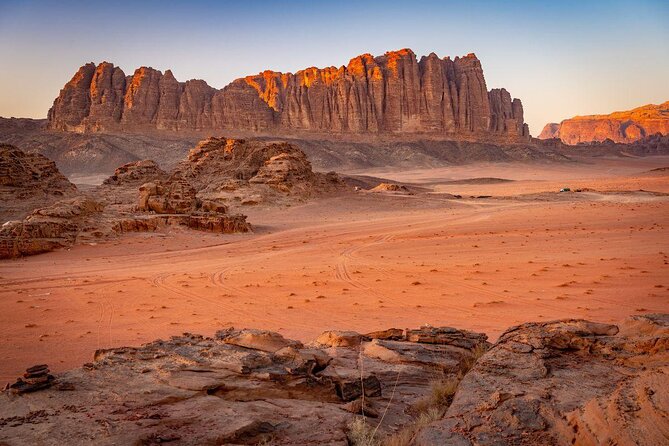
- Family-style welcome at Wadi Rum Village with Bedouin tea before you start rolling
- Lawrence-of-Arabia landmarks paired with practical desert context, not just a name drop
- Big Red Sand Dune climb for views and a classic downhill run on the sand
- Nabatean inscriptions and canyon stops where you learn what travelers were marking and warning
- Multiple natural arches and a narrow canyon so you get variety without long drives
- Optional extras like sandboarding, hikes, or a 1-hour camel ride for more texture
Quick Reality Check: What This “Short Tour” Really Means
This is built for people who want the Wadi Rum magic without burning a whole day. Expect a 2 to 6 hour experience, with the exact feel depending on which option you choose and whether you add extras like sandboarding or camel time. The guiding idea is simple: hit the signature places inside the protected area while you’re still fresh.
Your time on the ground is broken into bite-size stops, usually around 10 to 25 minutes each. That structure is great if you’re the type who hates waiting around. It’s also why the tour is popular for first-time visitors: you get enough variety to decide what you’d want to do in a longer follow-up.
Price-wise, it’s $45 per person, and there are group discounts. For Wadi Rum, that’s a solid value because you’re not just paying for a drive—you’re paying for a guide who explains what you’re seeing, plus the tour includes bottled water and guided stops at the major sites.
You can also read our reviews of more tours and experiences in Aqaba.

Starting at Wadi Rum Village: Tea, Then Off-Road
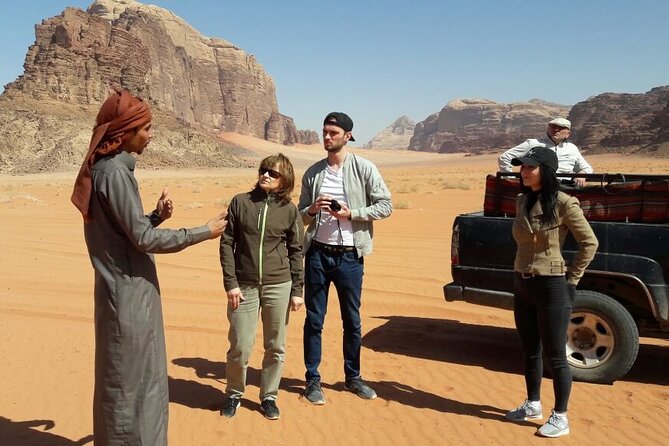
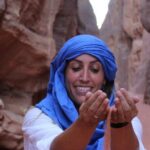
The first stop sets the tone. You’re welcomed at the family house in Wadi Rum Village with a cup of Bedouin tea. It’s not a quick photo-op either. It’s long enough to slow your brain down after travel and get into the right mindset for the desert.
Then you head out toward one of the area’s best-known water-related landmarks: Lawrence’s Spring. This is where the tour switches from “pretty desert” to “why this place mattered.” In old days, this water hole was used by travelers passing through the region, so it became a key reference point long before movies made it famous.
If you like your desert travel with a story you can repeat later, this opening helps. You’re learning why the routes existed and why water mattered more than scenery. That context makes the rest of the ride easier to follow.
Lawrence’s Spring and the Movie Connection
Lawrence’s Spring is famous because of the 1962 movie Lawrence of Arabia. But the site’s importance is older than Hollywood. You’re looking at an important ancient water hole—exactly the kind of thing caravans cared about when they were moving through harsh terrain.
The benefit here is that you don’t just hear a legend. You also learn how travelers historically used landmarks as survival tools. When the guide points out how water shaped movement, the protected area stops feeling like a set and starts feeling like a working map.
One practical note: this stop is short. Plan to listen carefully and ask questions right away if you’re curious about how Bedouins traditionally lived around the desert’s challenges.
The Big Red Sand Dune: The Classic Wadi Rum Move
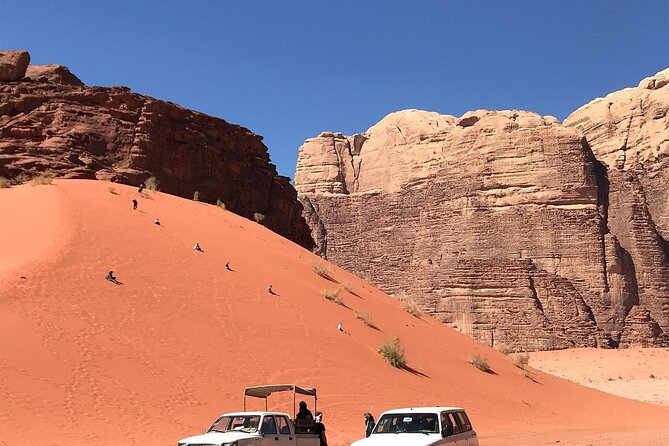
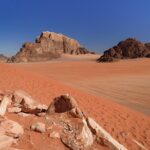
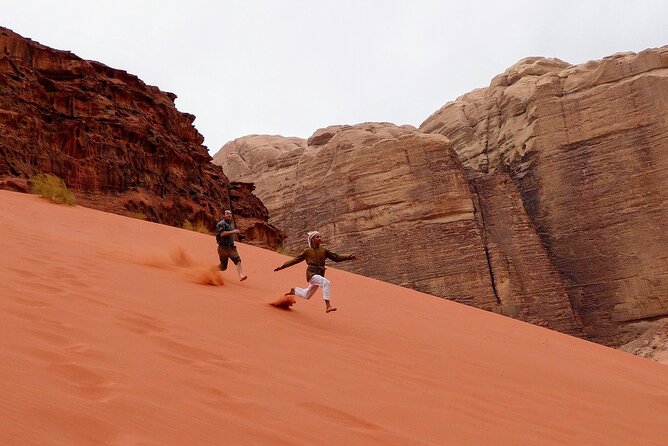
Next comes a highlight that’s hard to beat: the climb up the big red sand dune. It’s a straightforward sand ascent, not a technical hike, but it still works your legs. The payoff is the view—and the fun part is the way people run and jump back down if they feel like it.
This is one of those moments where short-tour formats shine. Even with limited time, you get that “we’re really in it” feeling that flat sightseeing can’t provide. And because your guide is with you, you also get faster context about what you’re looking at while you’re up there.
If you’re sensitive to steep sand or you don’t love uneven footing, take it slow. The dune is not a race, and you’ll get just as much out of pausing for photos and taking in the scale from your own pace.
Jebel Khazali: Nabatean Inscriptions in the Canyon
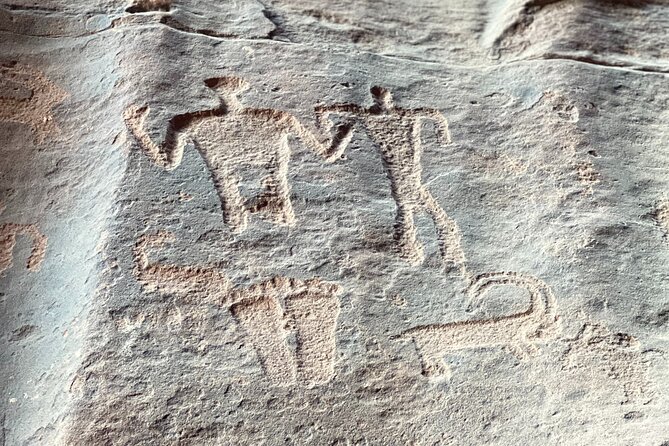
After the dune, the tour shifts into something more “readable” for history lovers: Jebel Khazali, a canyon area with Nabatean inscriptions. You’re not just walking in a pretty cut in the rock. You’re seeing markings that relate to travel and nearby landmarks.
Nabatean times matter here because they connect the desert to a wider network of trade routes and movement. The tour’s value is that the guide points out what’s actually etched and what it likely signaled for travelers. You end up with a better understanding of why those carvings exist beyond decoration.
The drawback to know ahead of time: inscriptions are small and detail-based. If you’re tired, cold, or rushing, you might miss some of the meaning. That’s why good guide attention matters—and why I’d recommend you ask one clear question when you arrive so you’re tuned in.

Um Frouth Arch: Scramble Up for the Photo
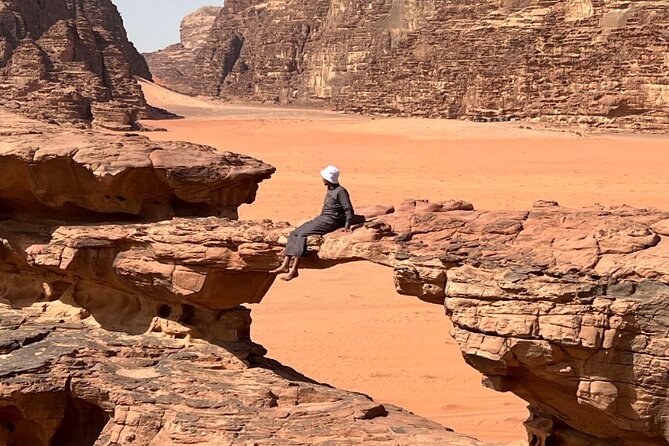
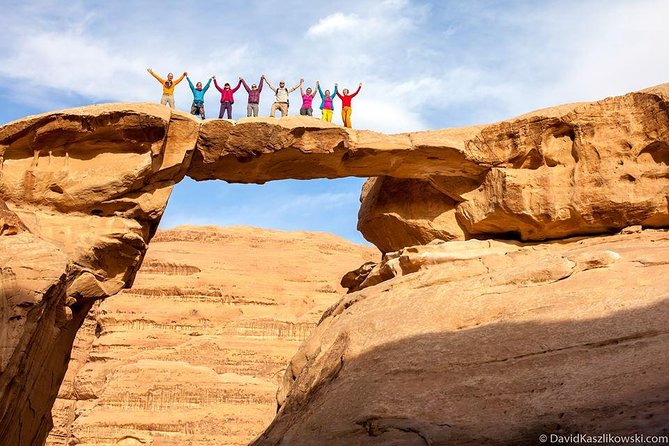
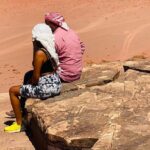
One of the most visually dramatic stops is Um Frouth Arch. You can scramble up to the rock arch and take pictures standing on top. This is the moment where the tour goes from “watch and learn” to “move and explore.”
The scramble is short, but it’s real. Sand underfoot can be slippery. You’ll want to wear footwear with grip and keep an eye on your footing rather than only on your camera.
The good part: the vantage point is the payoff. You get a sense of how Wadi Rum’s rock shapes sit within the wider valley. It’s the kind of photo spot that makes the rest of your trip feel more connected, because you can later match landmarks to the views you saw.
Abu Khushabah Canyon: Walk Through the Narrow Passage
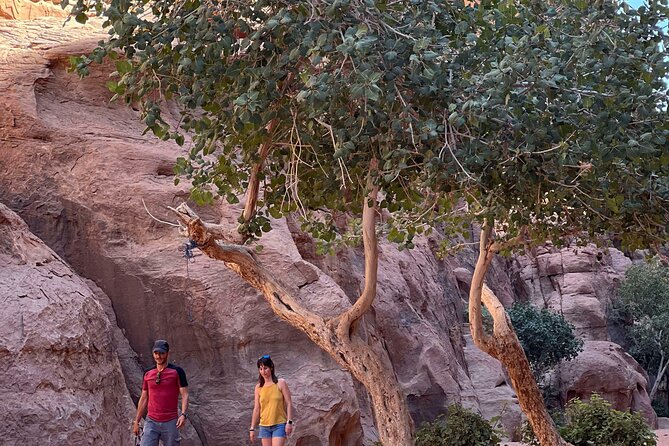
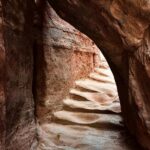
Next is Abu Khushabah canyon, described as an extremely beautiful narrow sandy canyon where you can walk through to the other end. Think of it as a “between-the-walls” moment inside Wadi Rum’s softer desert terrain.
This stop tends to feel different from the dune. Instead of height and open sky, you get a sheltered corridor feeling. The sand adds a slightly slow, careful pace. It’s also a great change of scenery after arch time.
If you’re traveling with limited mobility, this is the segment to consider first. You’re moving through sand in a narrow area, so it’s not built for people who want completely flat walking.
Little Rock Arch: Panoramic Views Without the Whole-Day Commitment
After the canyon, the tour delivers another arch stop: Little Rock Arch. It’s the smallest natural arch in Wadi Rum, but the size doesn’t matter much once you’re up there. The panoramic views are the point, including sightlines over Kor al-Ajram, Jebel Rum, and Khazali Canyon.
This is a smart stop for a short tour because it compresses big-feeling scenery into a quick window. You don’t have to commit to a long hike to get the “wow, look at that” moment.
The tour structure helps here too. After you’ve climbed and scrambled at earlier stops, you’re already warmed up for short bursts of movement. Just remember: even in quick segments, your legs will notice sand. Bring water and take breaks when you need them.
Lawrence’s House: Old Caravan Route, Bedouin Shelter, Big Views
Now you’re in the history layer. Lawrence’s House is an old Nabatean station set on a caravan route from Hijaz to Petra and Damascus. Long before Lawrence passed through, Bedouins used it as shelter from wind and bandits.
This stop is valuable because it reframes the famous name. You’re looking at a structure tied to actual desert survival and movement patterns. Then you add the views across the sweeping valley floor toward Jebel Raqqa, and the place makes more sense as a crossroads—not just an attraction.
If you’re into understanding the “why” behind the desert sites, this is one of your best stops. The guide can help connect the architecture and location to what caravans needed: shelter, route clarity, and visibility across the valley.
Anfeshiyeh Inscriptions: Routes, Warnings, and Camel-Race Signals
To finish strong, you visit Anfeshiyeh inscriptions. These Nabatean etchings were made to mark routes and give signals to passing travelers. Some point to water sources. Others warn of dangers. And some even show winners of winter camel races that once circled this mountain.
This is one of those tour moments that makes you smile because it’s not just survival info—it’s also life. The inscriptions reflect a place where travel, competition, and seasonal rhythms were part of the same landscape.
The practical value is that the whole protected area starts to feel like a communication system, not a blank stage. When you’ve seen enough carvings tied to routes and water, you stop looking at rock for decoration and start reading it like information.
What’s Included (and Why It Matters)
The tour includes English-speaking guides and cold bottled water from the ice box. That sounds simple, but it’s a big deal in Wadi Rum. Staying hydrated helps you enjoy the scrambling and dune time instead of getting cranky halfway through.
It also includes guided stops at key sites, and each of the listed stops is marked as Admission Ticket Free. That’s useful because it keeps your cost predictable and prevents you from dealing with separate entry fees at every turn.
If you’re choosing between options, I’d pay close attention to what extra activities are included with your specific short tour. Some options may add sandboarding, hikes, or camel rides.
Optional Extras: Sandboarding, Camel Rides, and Lunch
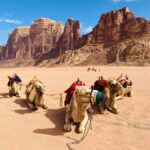
One reason people like these short tours is flexibility. If you want more action, you can add it. A 1-hour camel ride can be added for 10JD per person. You can also add a light lunch after arrival for 5JD per person, or a cooked lunch of chicken and rice for 10JD per person.
For me, sandboarding is the obvious “yes” if it’s offered in your chosen option, because it’s built for this environment. Camel rides can be great too, but only if you’re comfortable spending time on something slower and less hands-on than the jeep and dunes.
As for lunch, add it if you’re already hungry after the desert time. If you prefer to keep things light, you can also skip it and grab food later in the area.
Price and Value: Is $45 a Good Deal Here?
At $45 per person, this tour sits in the “worth it for the time” category. Here’s why. You’re paying for guided access across multiple high-interest sites in a protected area, plus water, plus an English-speaking guide who explains what you see.
If you tried to piece this together independently, you’d likely spend more on transport and you’d still have trouble making sense of the Nabatean inscriptions and route markers without interpretation. The guide turns carved rock into a story about travel, water, shelter, and warnings.
Also, the group size is small: up to 6 travelers. That helps. You get more chance to ask questions and spend less time waiting for the group to catch up.
Timing and Weather: How to Choose the Right Day
Good weather matters for this experience, and that’s not a small detail. Wadi Rum is weather-driven for comfort and safety, especially with dune and canyon movement.
If you want to see sunset, ask for an afternoon start. The desert light changes fast, and a sunset timing can make the dune and arches look totally different from midday.
Given that these tours are commonly booked ahead, I’d plan to reserve in advance so you can match your schedule. The tour averages around 19 days ahead, which is a hint that spots can move quickly in peak periods.
What to Wear and Bring for a Short Desert Tour
You can keep this simple, but don’t wing it.
Wear shoes with grip for sand and short scrambles. Bring a light layer if the temperature shifts. And if you’re prone to sunburn, add sunscreen and a hat. The tour includes water, but it’s still smart to sip steadily and not just at the end.
You’ll be moving through dunes, canyons, and to the top of an arch. So think: comfortable, practical, and ready to get a little dusty.
Service animals are allowed, and most people can participate. Still, if you have concerns about scrambling or narrow sandy walking, it’s smart to check with the operator before committing.
Should You Book This Wadi Rum Short Jeep Tour?
If your goal is to get a real taste of Wadi Rum in a manageable time, I’d book it. The biggest wins are the start with Bedouin tea, the smart mix of signature sites like Lawrence’s Spring and Lawrence’s House, and the fact that you also get the Nabatean inscriptions that explain what travelers were marking and why.
I’d also consider it if you like guided context. Even the quiet stops, like inscriptions, become more meaningful when someone points out what you’re looking at.
I would not choose it as your only Wadi Rum plan if you want long hikes, lots of downtime, or fully car-free exploring. This is a fast, active sampler. It’s meant to move.
If you want a short, well-organized desert introduction that still feels authentic, this is a strong fit.
FAQ
How long is the Wadi Rum short jeep tour?
The tour typically runs about 2 to 6 hours, depending on the option you choose.
What is included in the tour price?
The tour includes English-speaking guides and cold bottled water. Admission tickets for the listed stops are marked as free.
Are there optional activities like camel rides?
Yes. A 1-hour camel ride can be added for 10JD per person. Depending on your chosen option, other activities like sandboarding or hikes might be included.
Can I get lunch during the tour?
You can add a light lunch for 5JD per person or a cooked lunch of chicken and rice for 10JD per person after arrival.
Where do I meet for the tour?
The start is at Wild Wadi Rum Tours in the Wadi Rum Protected Area, School Street, Wadi Rum Village, Jordan. The ticket redemption point is Wadi Rum Visitor Center at JCQM+MPH, Wadi Rum Rd, Wadi Rum Village, Jordan.
What is the cancellation policy like?
You can cancel for a full refund if you cancel at least 24 hours before the experience starts. The experience requires good weather, and if it’s canceled due to poor weather, you’ll be offered a different date or a full refund.